The Search for Diademed Sandpiper-Plover
Lessons from a quest bird
This is an excerpt from my full travelogue of birding in central Chile. To access the full article and another quest bird story when published, subscribe to the Field Rambles newsletter.
Sometimes, a single bird can shape an entire adventure: the thing you plan everything else around in your trip. The desire for the encounter might come from the species’ mystique, uniqueness, or difficulty in finding — or from something more personal to you, a connection to something else, or a memory from flipping through a field guide long ago.
Our days in Chile were winding down, but Raymond and I had one more all-out birding excursion planned here in the Yeso Valley. There was a singular reason we’d planned our itinerary to double back through Santiago, heading in a new direction and staging far outside of the city. With our dwindling lunch supplies packed, we took off again on a full-day drive to higher altitudes.
The makings of a quest bird
We had three places to look for our main target of the day: Diademed Sandpiper-Plover. This is one of those species that many birders dream of seeing for a variety of reasons, including its uniqueness in structure, life history, and within its family, plus its downright beauty. Even the name denotes mysticism.
The Diademed Sandpiper-Plover is also special because of where you have to go to find it. The species is in the highest parts of the southern Andes Mountains, where it is restricted to peat-laden bogs and gravel bars near moving water sourced from glacial runoff. It is often cryptic and hard to find, but every chance taken to see this species is guaranteed to be adventurous, successful or not.
It’s a recipe for a great excursion: a unique species in a spectacular place that requires planning, patience, and luck. We planned and prepped, were willing to work for it, and were excited to see what was in store for us as we set off.

A long search in the making: Into the Yeso Valley
First attempts
Our first stop was at an outpost of cobbled-together sheds with signs offering food and bathrooms, but with no one around in the early morning light, we walked past and up the rushing stream that poured from folded mountains.
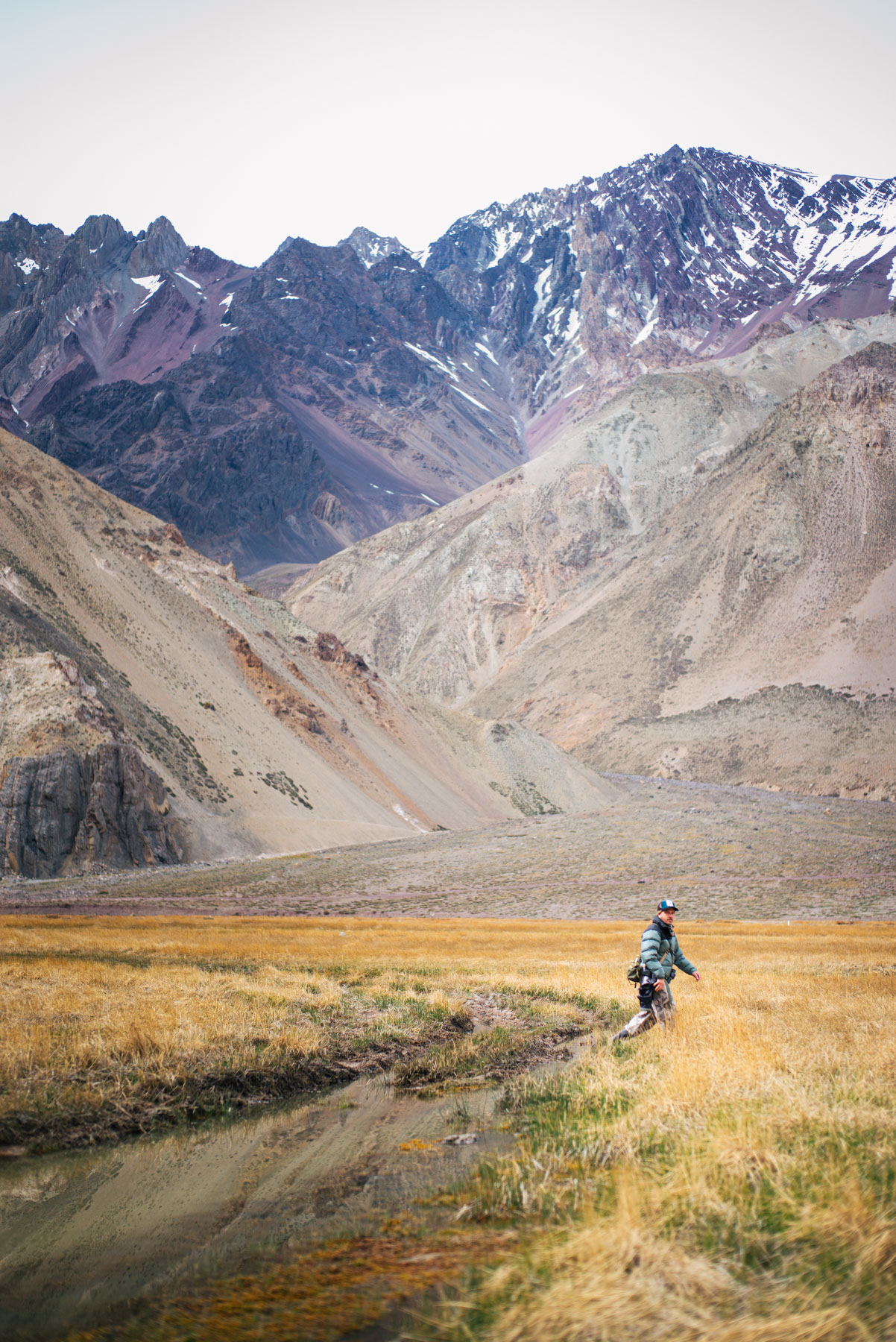
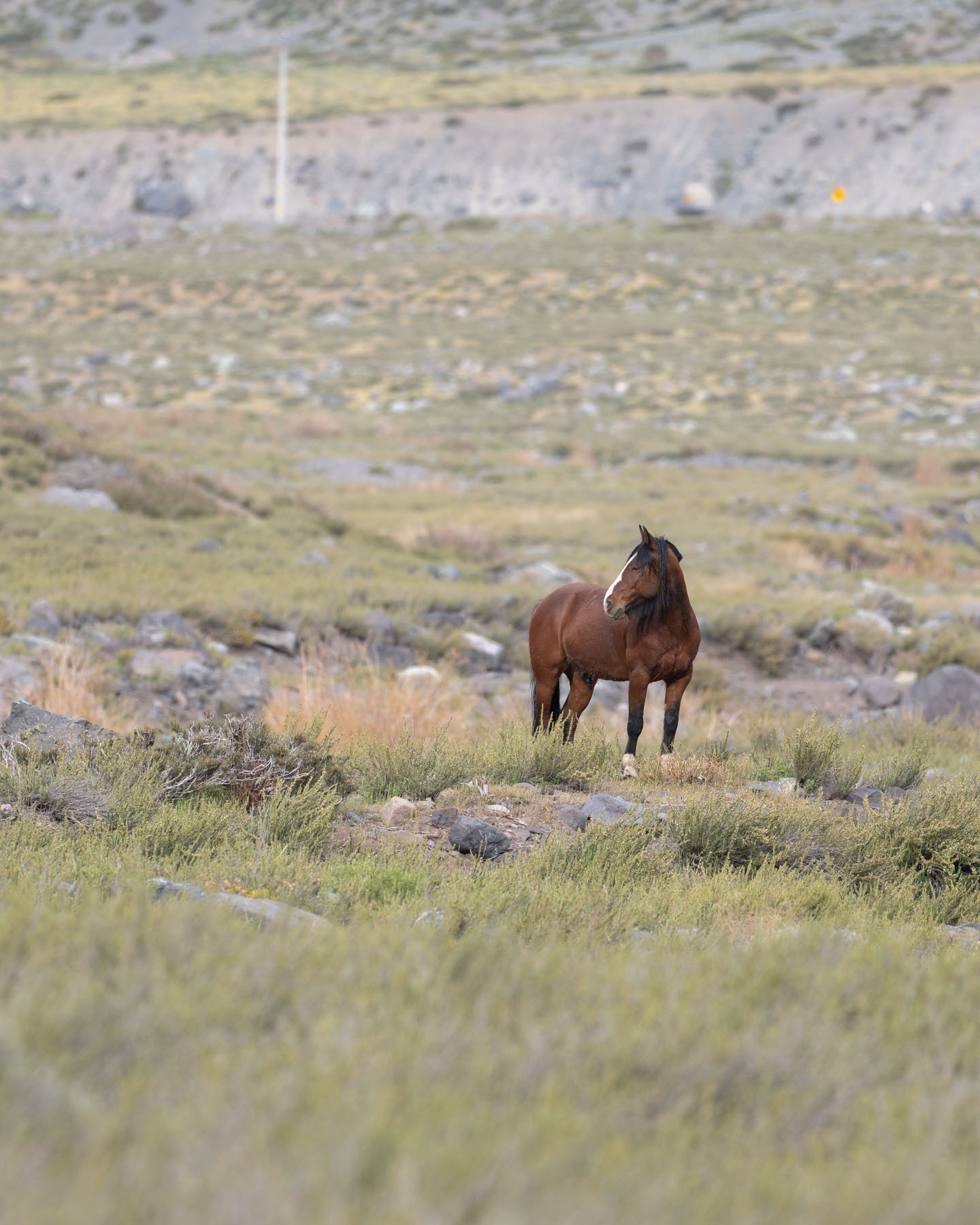
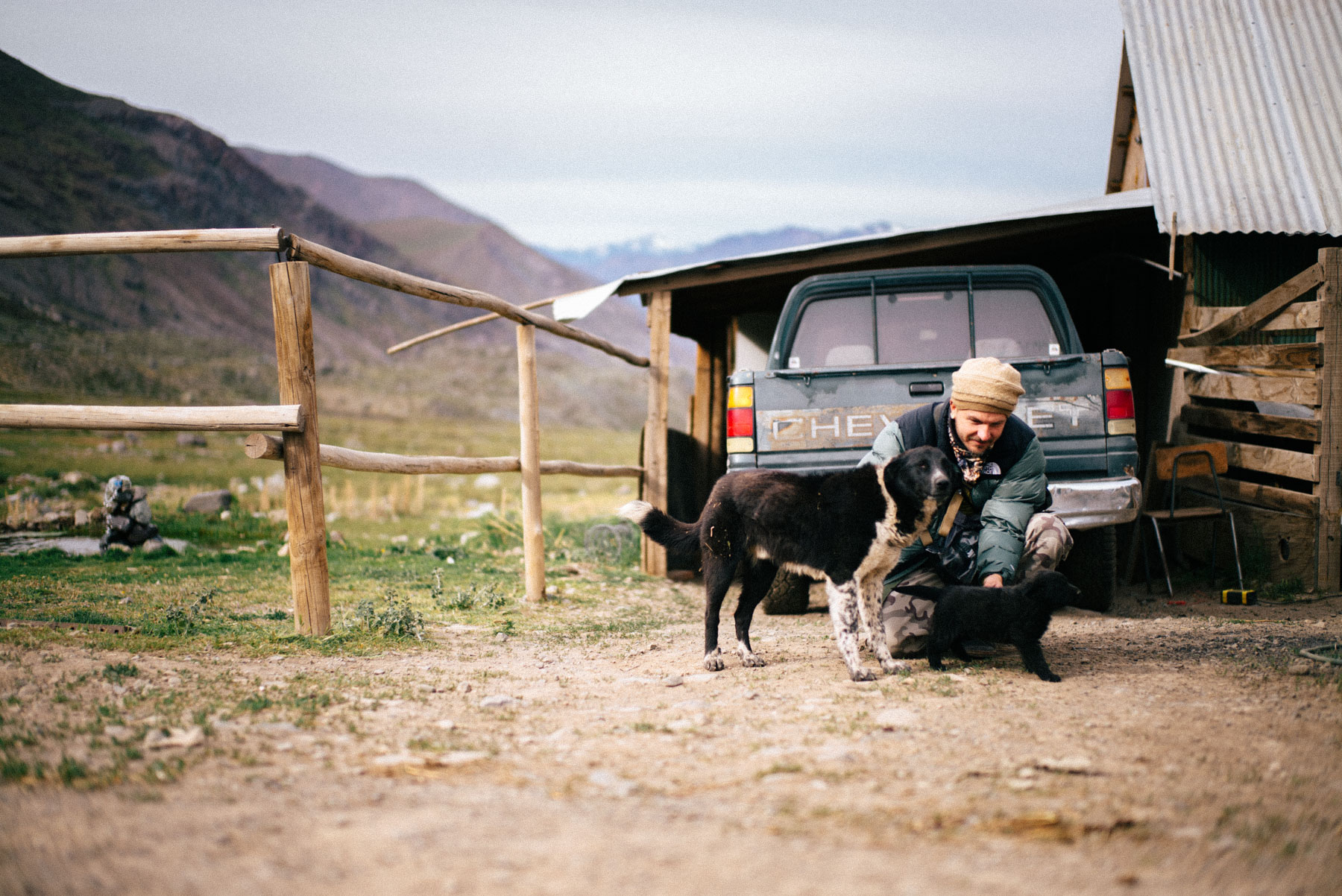
We moved slowly on well-trodden paths that ran through spongy grasses alongside small streams that spread out through the valley. There were cattle, horses, llamas, and dogs around; we hadn’t seen much livestock up until this point, but free-range animals turned out to be more common up here. Our eyes stayed low, looking for anything that moved, getting a feel for what could be hiding in the dips.
We were treated to hundreds of restless Greater Yellow-Finches and our first Black-winged Ground Doves, but had no luck with the Sandpiper-Plovers. We’d spent about an hour on our initial search, and with the morning progressing and the constant threat of quickly changing weather, we decided it was best to move on to our other stops in search of better habitat.
It was the first of many decisions that day to stay and search longer in one place or move on to somewhere new as the hours of daylight ticked down. At that point, I wasn’t yet worried we’d miss our target, but the reality was sinking in that this species is cryptic, difficult, and entirely missable. Plus, the weight of a trip winding down was starting to creep in. On our last full day, after nearly two weeks of experiences that would make it hard to return to normal life, it felt extra important to avoid disappointment.


Embalse del Yeso (Yeso Resevior)
Our road had an endpoint: at nearly 10,000 feet, Termas Del Plomo were hot springs that seemed to get few visitors. Before that, however, Embalse del Yeso was a showstopper for many. The lake is the turquoise-blue of southern Andean dreams, surrounded by a gorgeous mountainscape. We wound around a precipitous road under dramatic cliffs that constantly threatened to send loose rocks bouncing down. It felt vaguely familiar to views I’d seen in photos, and yet, it had its own peculiar magnificence.
For nearly all of our trip, we’d been practically alone on trails and most roadways. But, suddenly, we were passing vanfuls of tourists snapping photos of the lake while their drivers set up tables of elaborate charcuterie boards being prepared by drivers. It was a bizarre thing to see anywhere, but especially jarring in these moonscapes I’d gotten used to having to ourselves. It didn’t last long; as soon as we reached the far side of the lake, the world emptied of people again, and our search continued.

Trodding cushion bogs
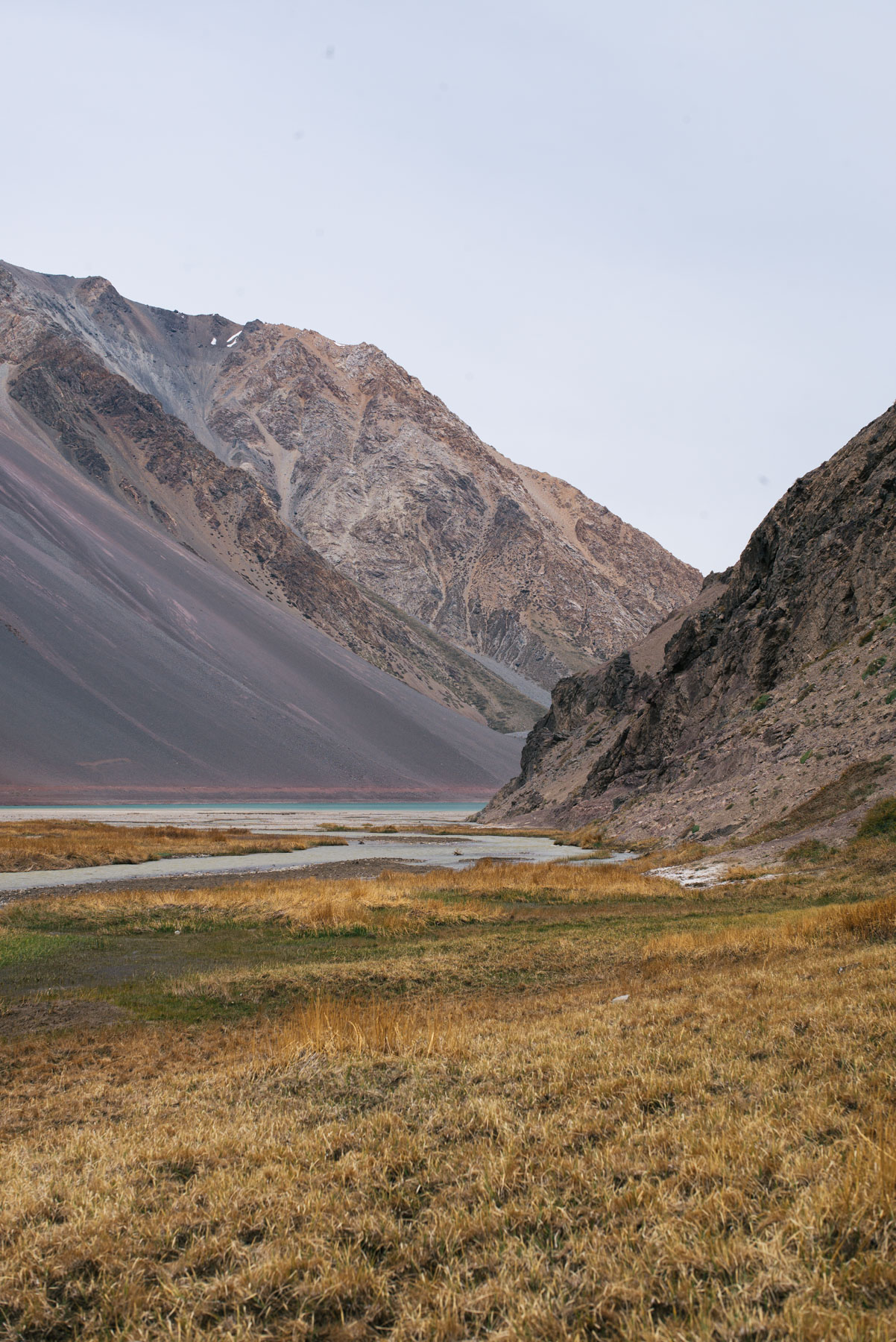
We turned off the main road to park beside a mass of gravel that looked like it was simply piled together from a rockslide for future construction use. Here, the habitat in the small, flat basin looked well-suited to Diademed Sandpiper-Plover needs. In front of us was a half-mile-wide bowl of rocky streams lined with some gravel bars and much more peatland and grasses. It felt right to comb it all on foot, and so we did, guided by Gray-breasted Seedsnipe proudly singing from boulders all around us. One Magellanic Snipe flushed, then more.
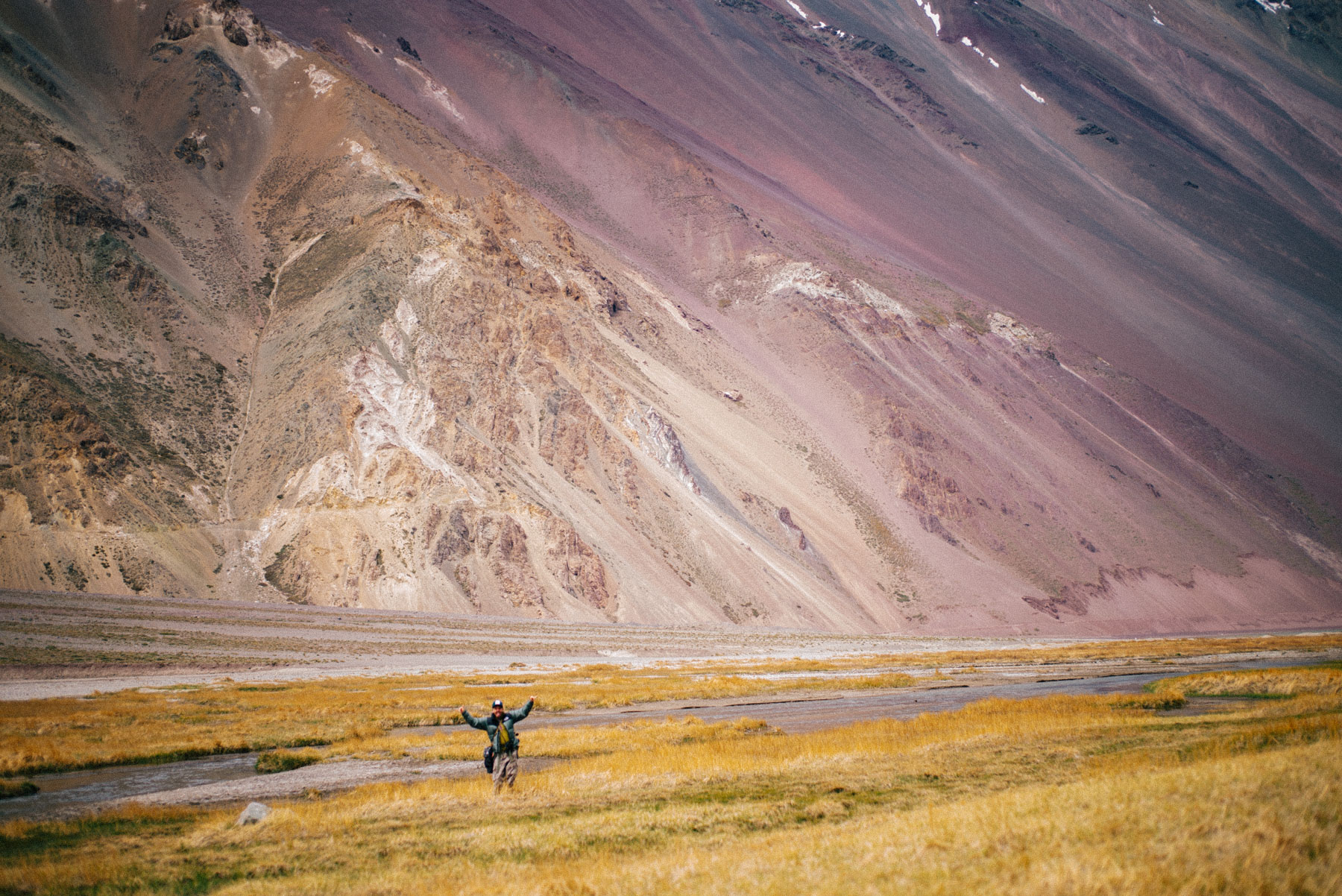
We split up, wandering the extraordinary landscape while photographing the birds around us and combing for our target. The gradients of the towering slopes were made up of earthy tones in unusual combinations: from the bottom, there were dark waters and golden grasses; then lifeless grays of recent landslides interspersed with muted green growth; followed by mountains of maroons shadowed by deep purples; and finally, the stark contrast of ample snow still covering the peaks in early summer. Was the sky beyond that? I only remember it when looking back down to the lake, which was around the bend from the peatland I was easing through.


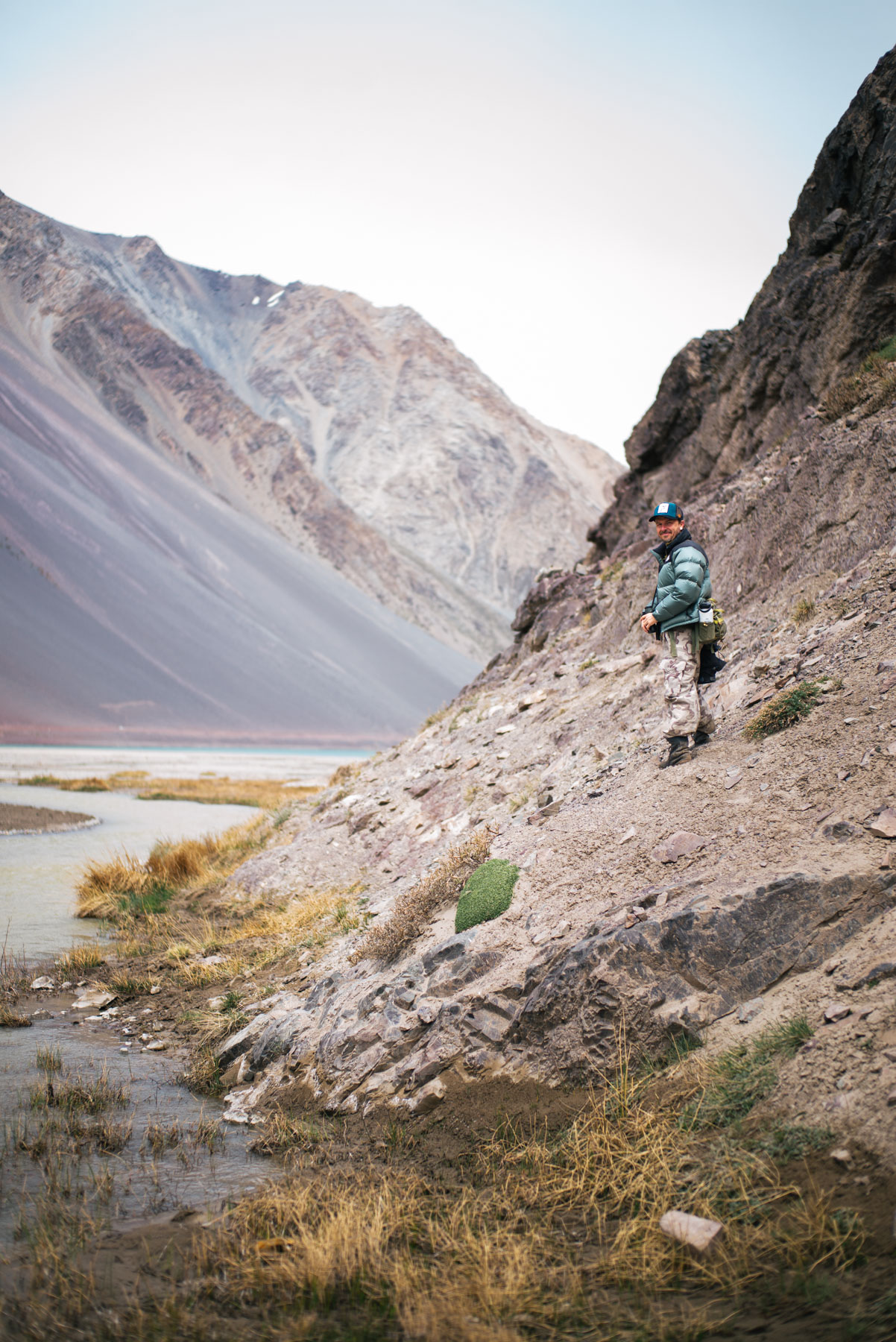
The going was slow and methodical, and in a place that is still and serene, time doesn’t seem to matter. It was nearly two hours before we met up again, having circled the valley in opposite directions. By this point, we’d both crossed enough soggy land and running water that we’d be soaked to nearly our knees, but that was just another level of sensory absorption here. We worked along a goat trail that wound up the cliff face to look back at the bog and gravel bars extending toward the lake, making sure we’d covered every inch that seemed to hold potential. In the opposite direction, on the far side of the lake, those vans of daytrippers were specs through our binoculars.
“Strike two,” Raymond said with a small smile, and for time’s sake, we turned back to the car.
“Feeling discouraged yet?”
I said no, I wasn’t discouraged. In reality, I really wasn’t sure. I was feeling opposite pulls of awe and a sort of numbness I still can’t quite describe. Something about all that time by myself in a place so ethereal that it seemed like it couldn’t still exist on today’s earth had pulled my mind elsewhere. It was as if my heightened senses were stacking emotions in ways I wasn’t really cut out to handle: appreciation and melancholy and wonder and dread.
And yet, we were brought here by a quest. Our day had already tipped into its second half, and we’d spent a lot of our precious time in this one area. We were, thus far, unsuccessful in finding our target. I started to think that we might miss it altogether. The trip was undoubtedly worth it, regardless. But in that moment, finding the bird felt more important so that this place didn’t just feel like a consolation — and maybe so that the complicated feelings it stirred in me would tip positively in retrospect.
Unspoken between us, we each wanted to find our target for each other’s sake, too. The trip had been fantastic, but had its share of trials outside of our control. The search for Diademed Sandpiper-Plover was both something to look forward to and a quest that felt redemptive as our time together in the region wound down. I had to work to push the pressure from my mind and stay focused on our task at hand and our surroundings.
Sitting in the back of the open hatchback, snacking on peanut butter and crackers, we tallied our remaining daylight and decided it was best to get to our last location for the best odds at finding a Sandpiper-Plover.
It was several more miles up on the increasingly rocky road, so we took off to finish our journey to its end. We almost didn’t make it there.

Finding life on the rocks
First, long after the road had turned into a single gravel lane, my stomach dropped as a locked gate appeared in our way with a sign saying this was private land. This was no national park; the main reason folks made this trek was to go to the hot springs. Did we miss information that they were closed on certain days? Thankfully, my fears were quickly eased as a fork in the road loomed into view. A man appeared from a simple outpost, collected a small fee, then unlocked the gate.
We bumped slowly through a wide stream crossing, fairly nervous about our tires. The signs for the hot springs loomed into view, hard to pick out in the expanse of gravel, but showing us that we were still on what was considered the road. Before we could make it there, our second diversion stopped us in our tracks.
There was no buildup, no first hint of movement, no initial uncertainty. They were simply there, right outside my window: a Diademed Sandpiper-Plover, and beside her, a bouncing chick.
We’d noticed photos on nests from a few weeks ago, and Raymond had pointed out before we set out that the timing was right for chicks to emerge, but after all the preparation and the long day of searching, to actually see this unfold right beside us…
Raymond hit the brakes and eased over, and without speaking, we grabbed our optics and scurried out just as a second chick appeared. Here, in this open and rocky expanse cut by a trickling creek, this family of sandpiper-plovers fed.
An afternoon with Diademed Sandpiper-Plovers
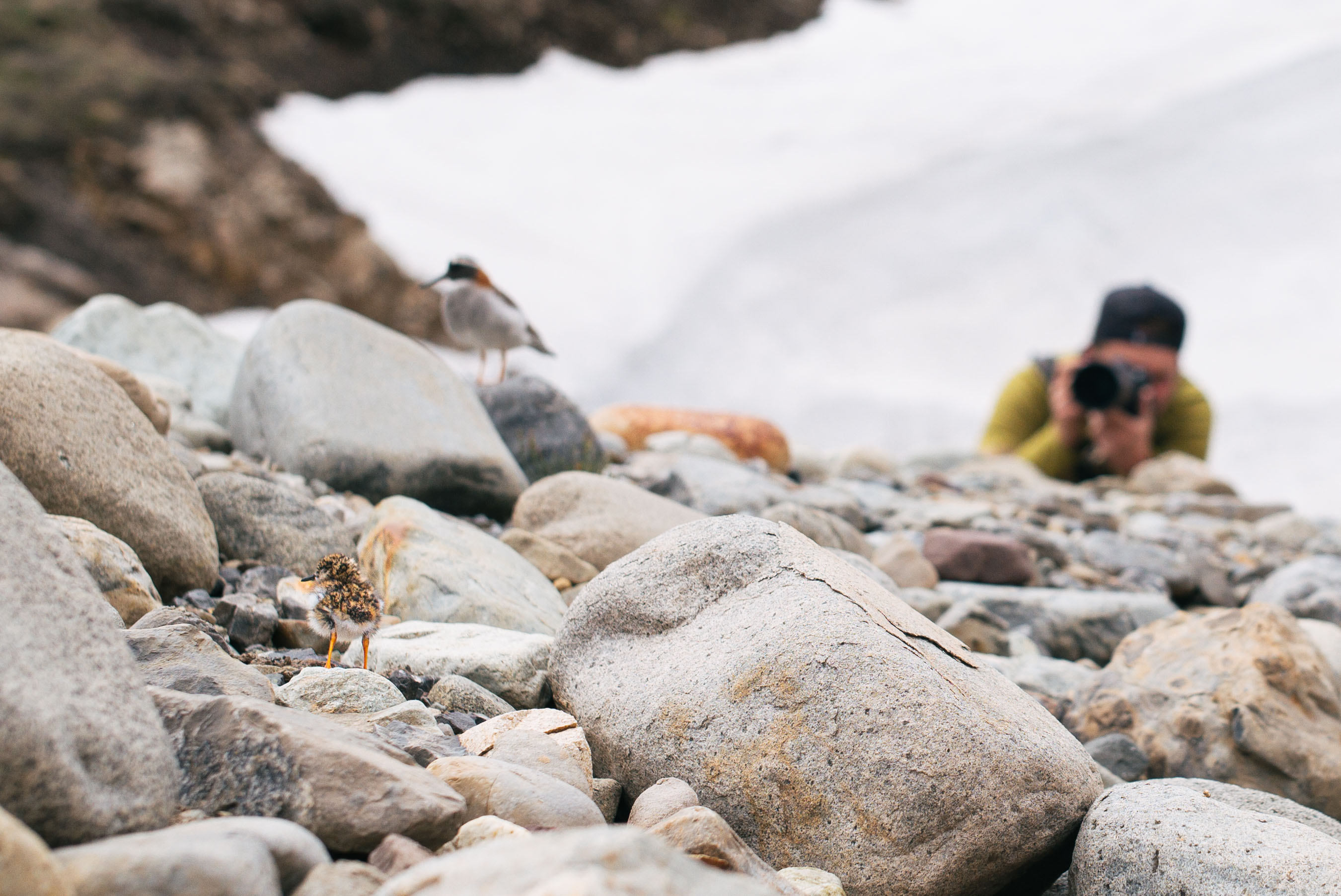
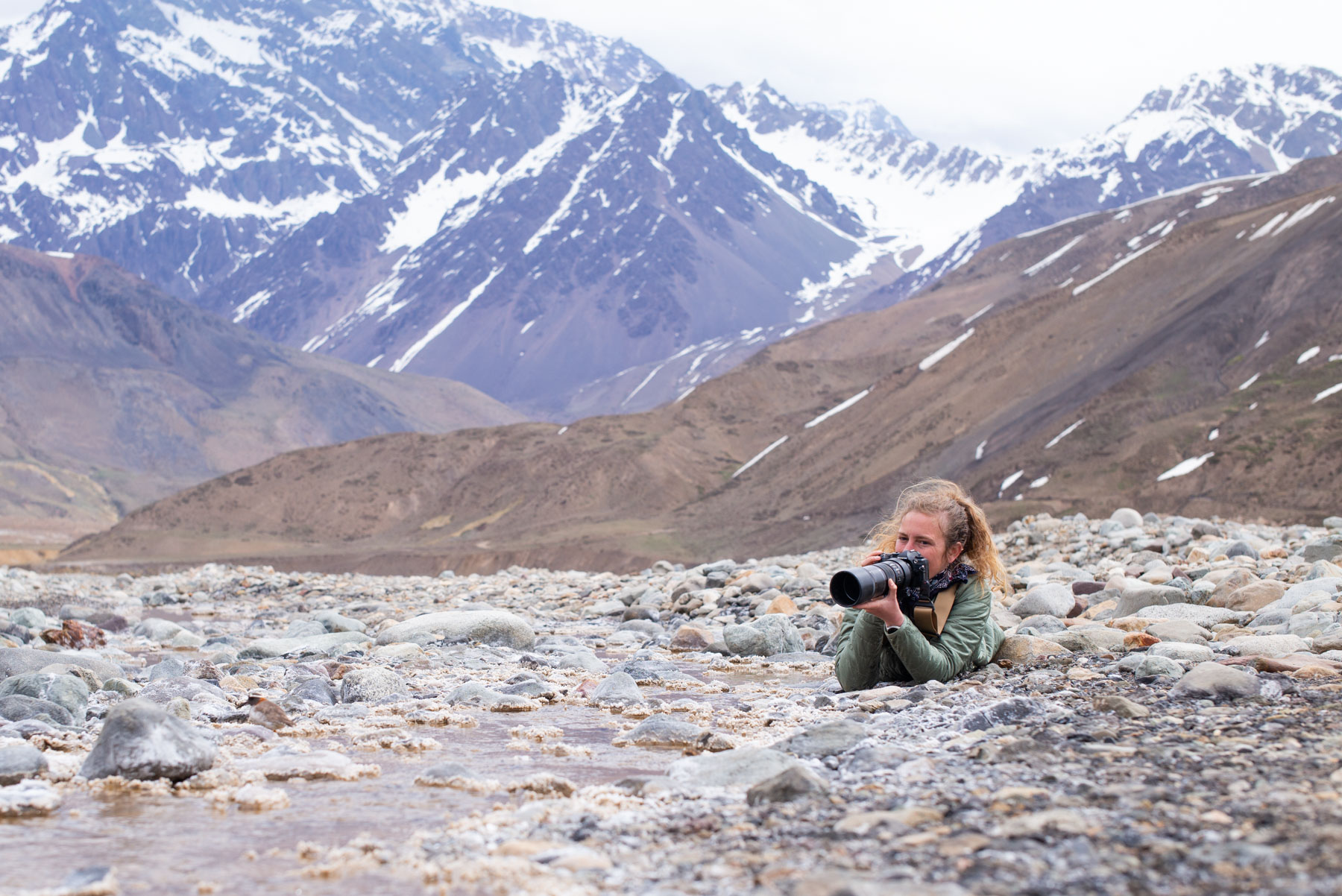
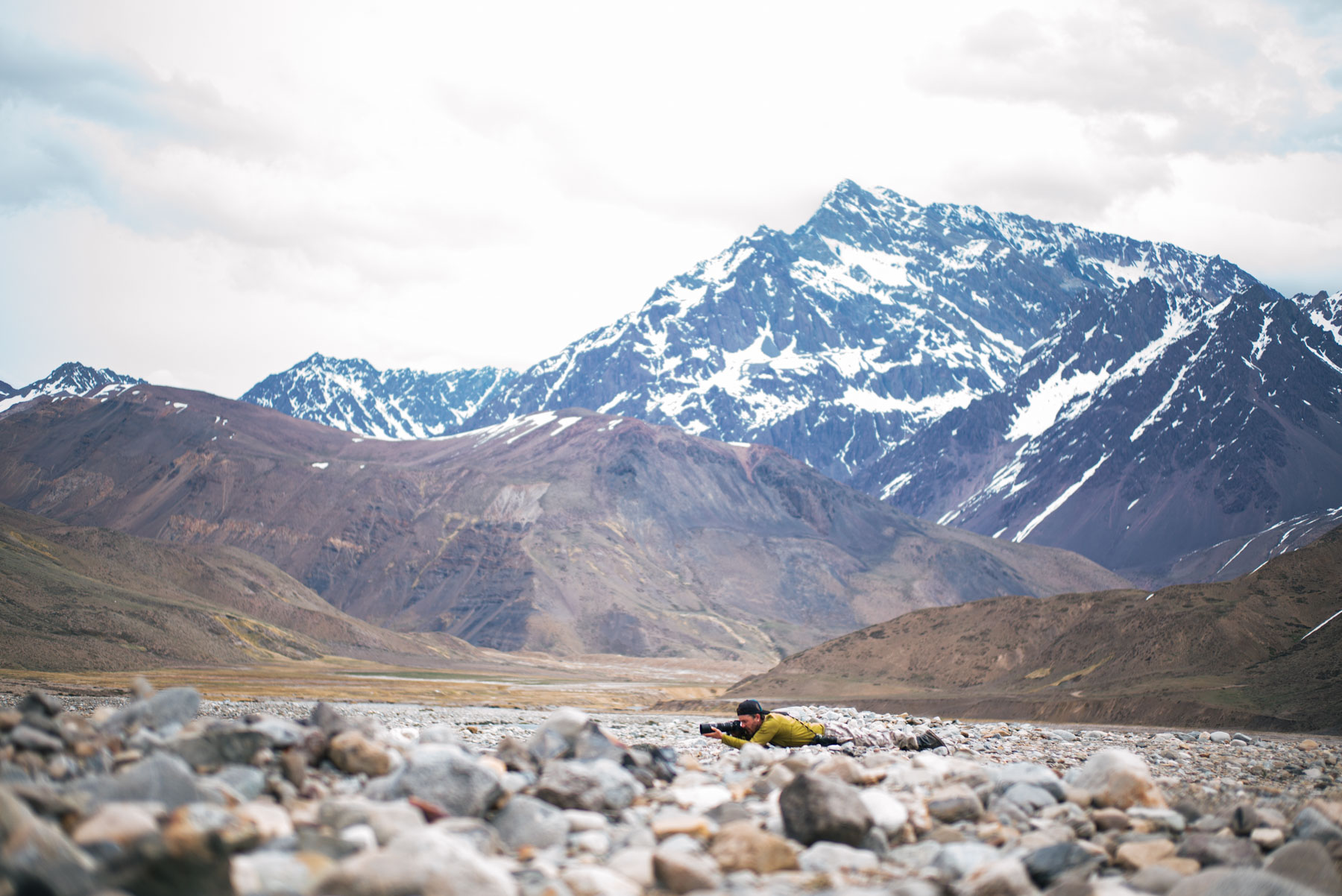
These chicks were quite young and dependent on their parent for guidance and protection. We assumed this was the mother, but from reading what limited accounts I can find about their breeding tendencies, both parents usually help raise the chicks. We walked a ways ahead of the direction the trio was headed and settled belly-down on the pebbles to watch.
Entering their world
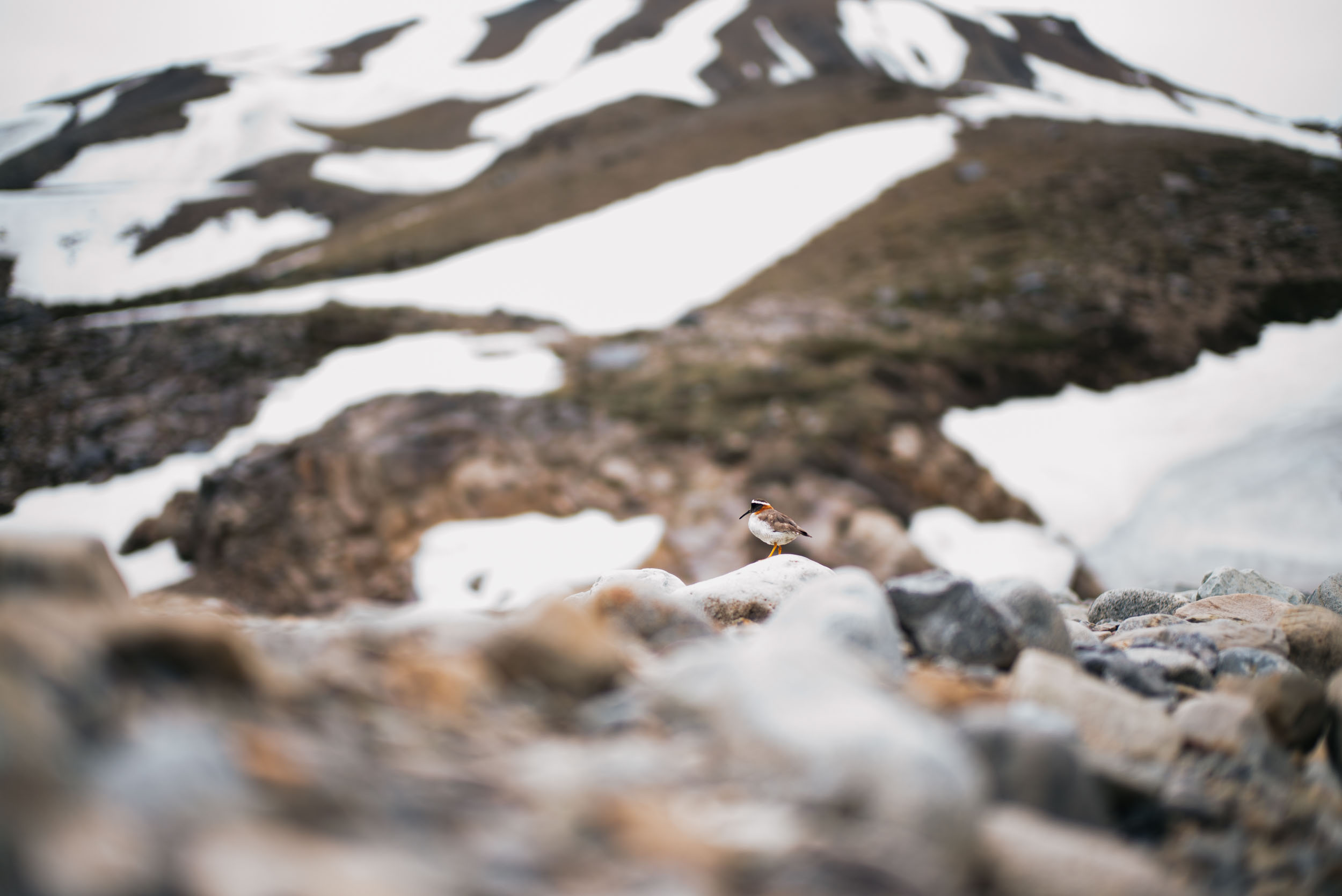
At eye level, many of the rocks were taller than the adult. She scuttled in and out of view as she approached, not probing like most plovers, but picking food selectively as she softly quipped to her trailing chicks. They were even harder to find as they wove through their habitat, but we knew they were coming, too. It wasn’t long before they were all streamside again and only a few feet from us. She was completely aware of our presence, but not deterred at all. All three resumed unbothered foraging, still inching closer.

Studying Sandpiper-Plovers
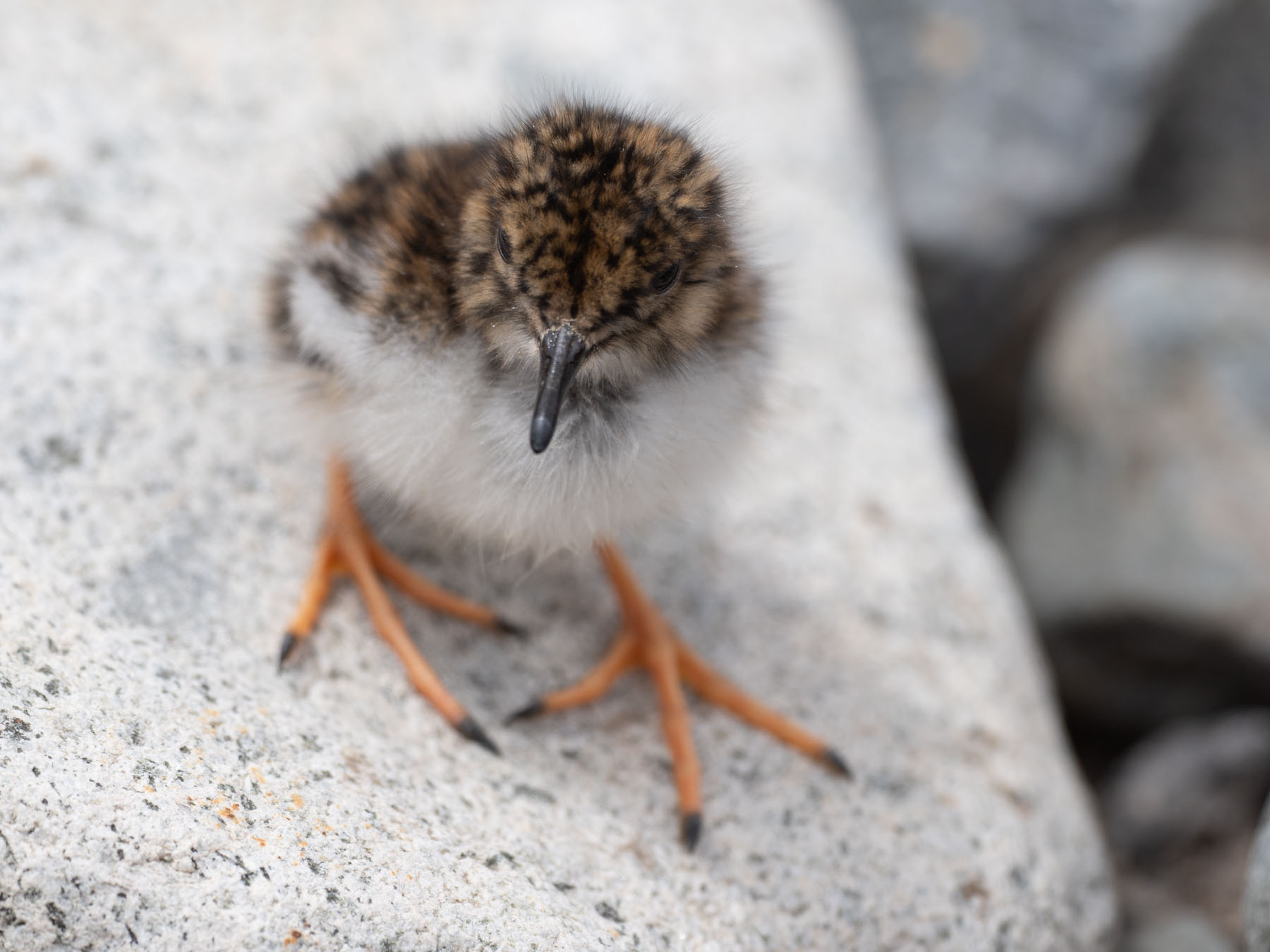
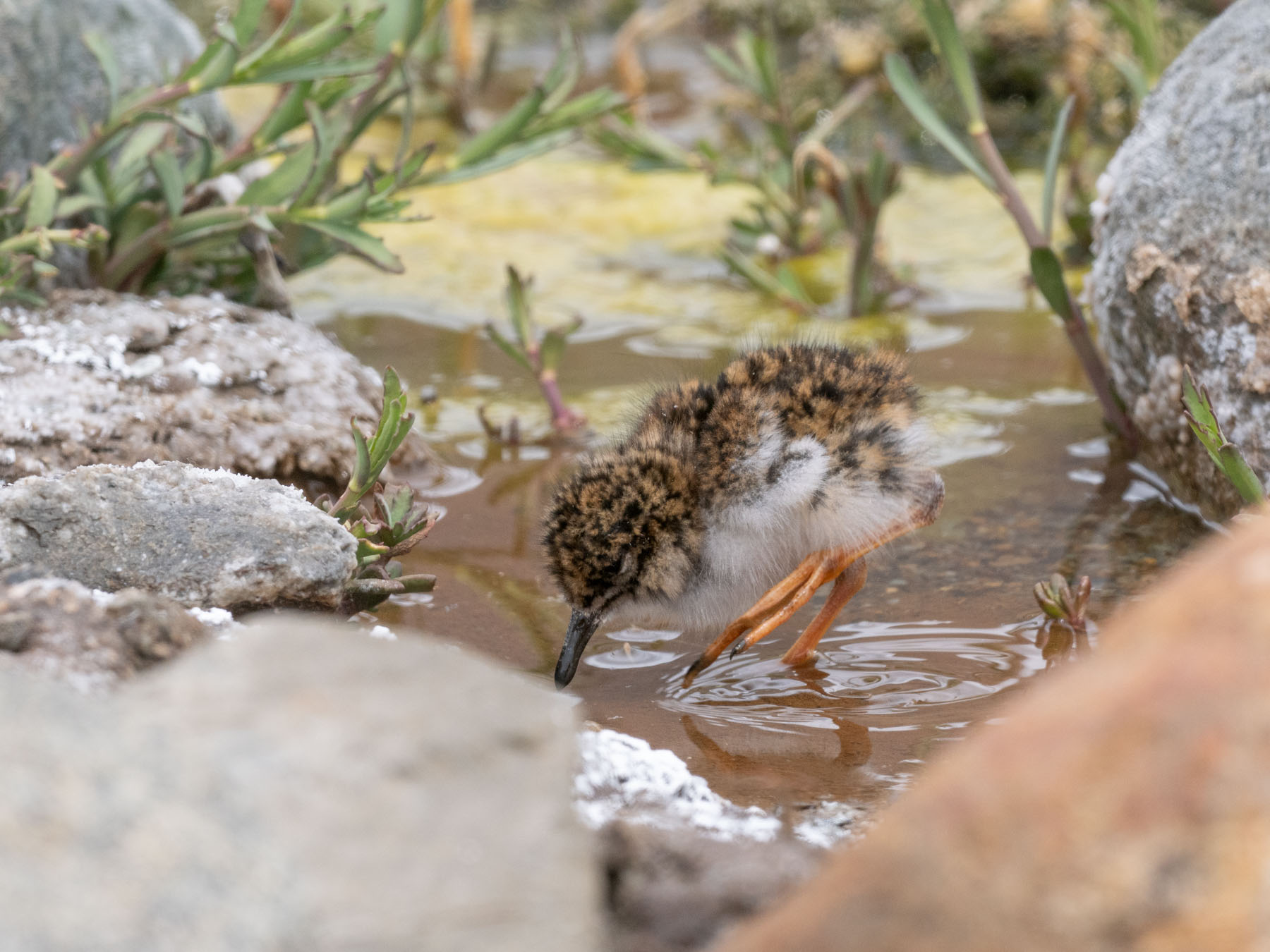
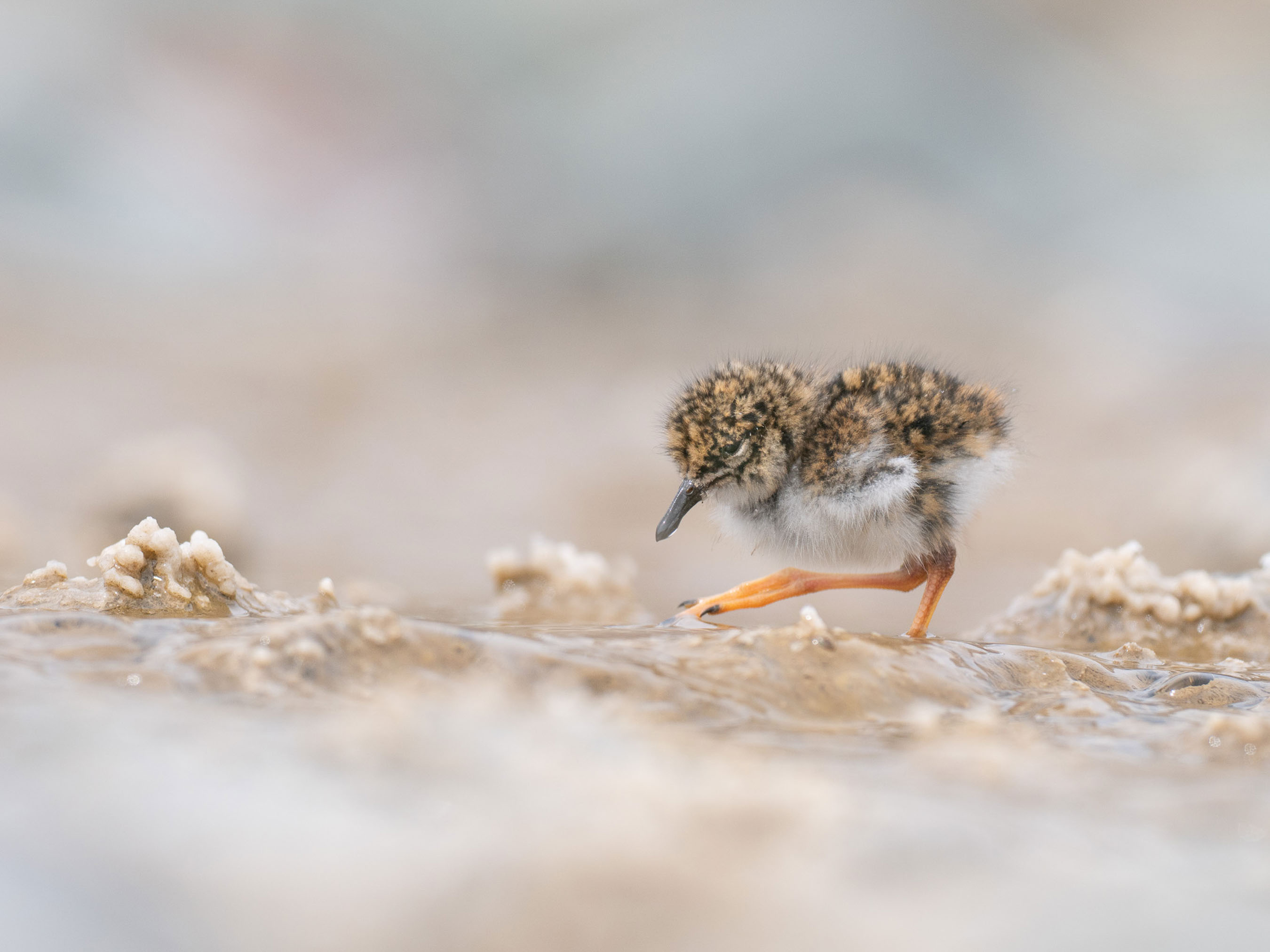
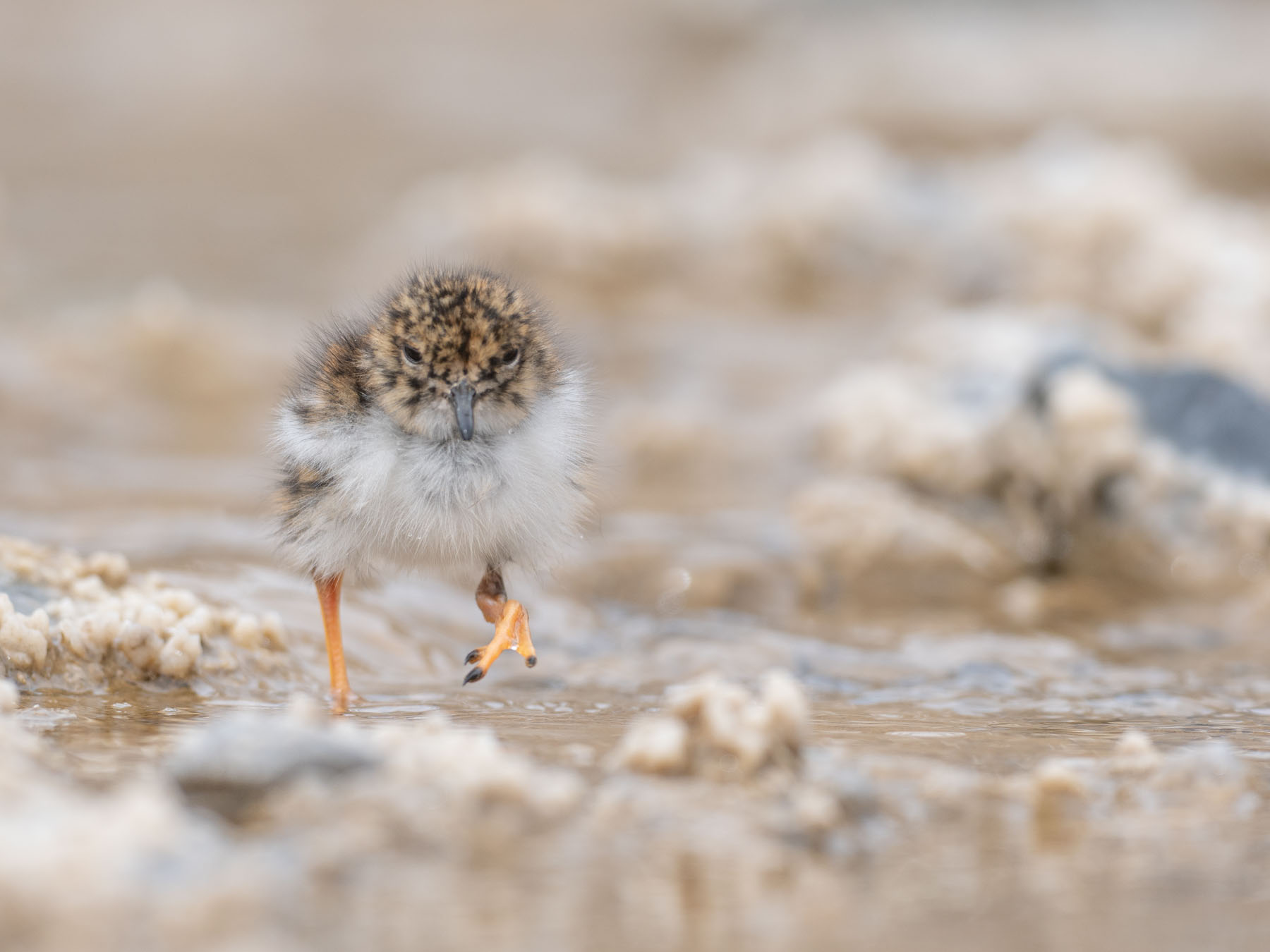
The chicks were constantly on the move. They tended to stay in water that was not much deeper than their comically-sized feet, and their black toe tips offset their bright orange legs. Their bodies were full floofs of marbled black and brown down and white bellies. They were so round that their tails were nowhere to be found, and their stubby wings were only apparent when they raised them a bit for balance. Sometimes, they’d trip or stumble into deeper water than they had expected, and quickly right themselves, shake off, and continue on without dismay.


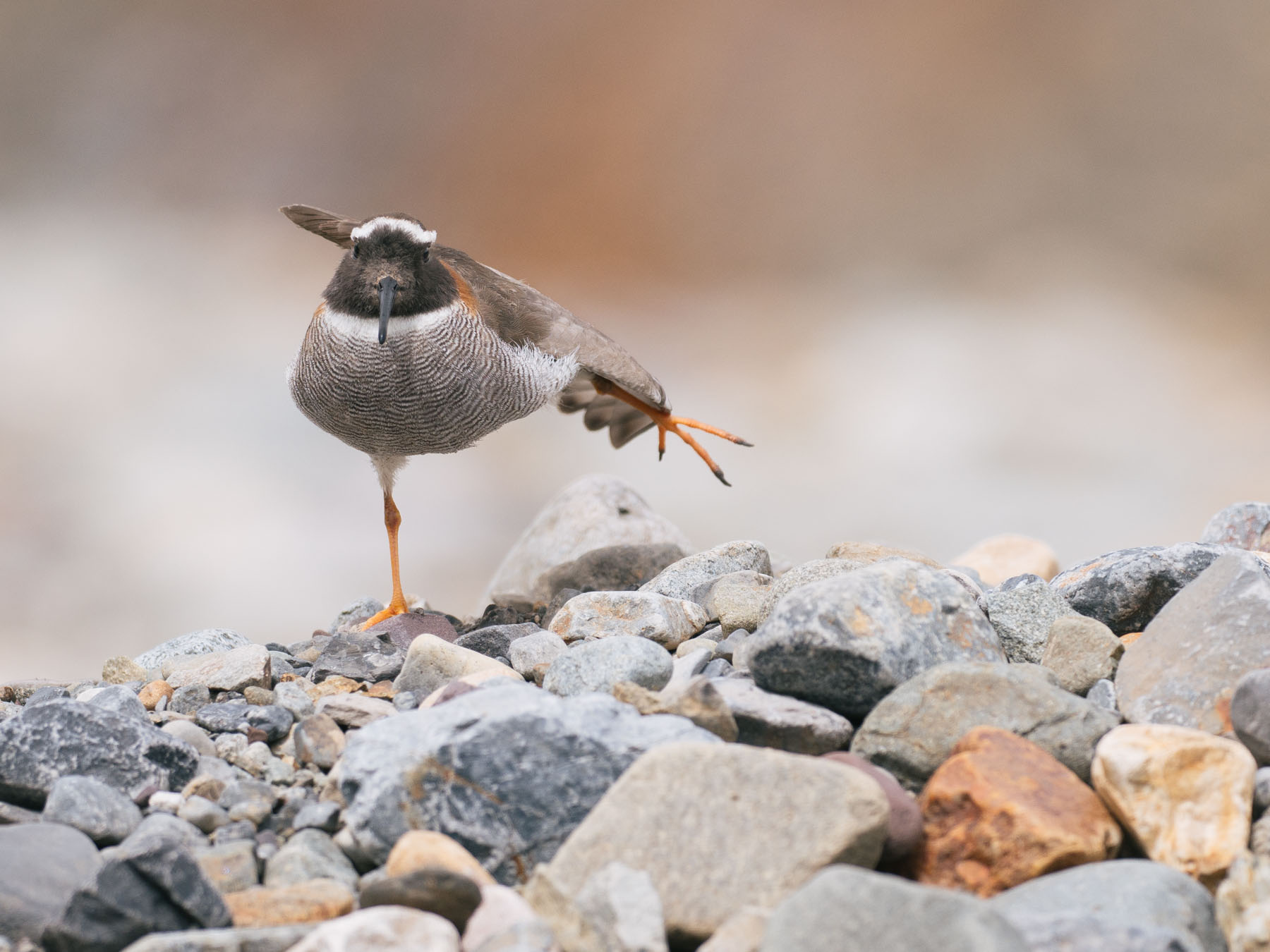
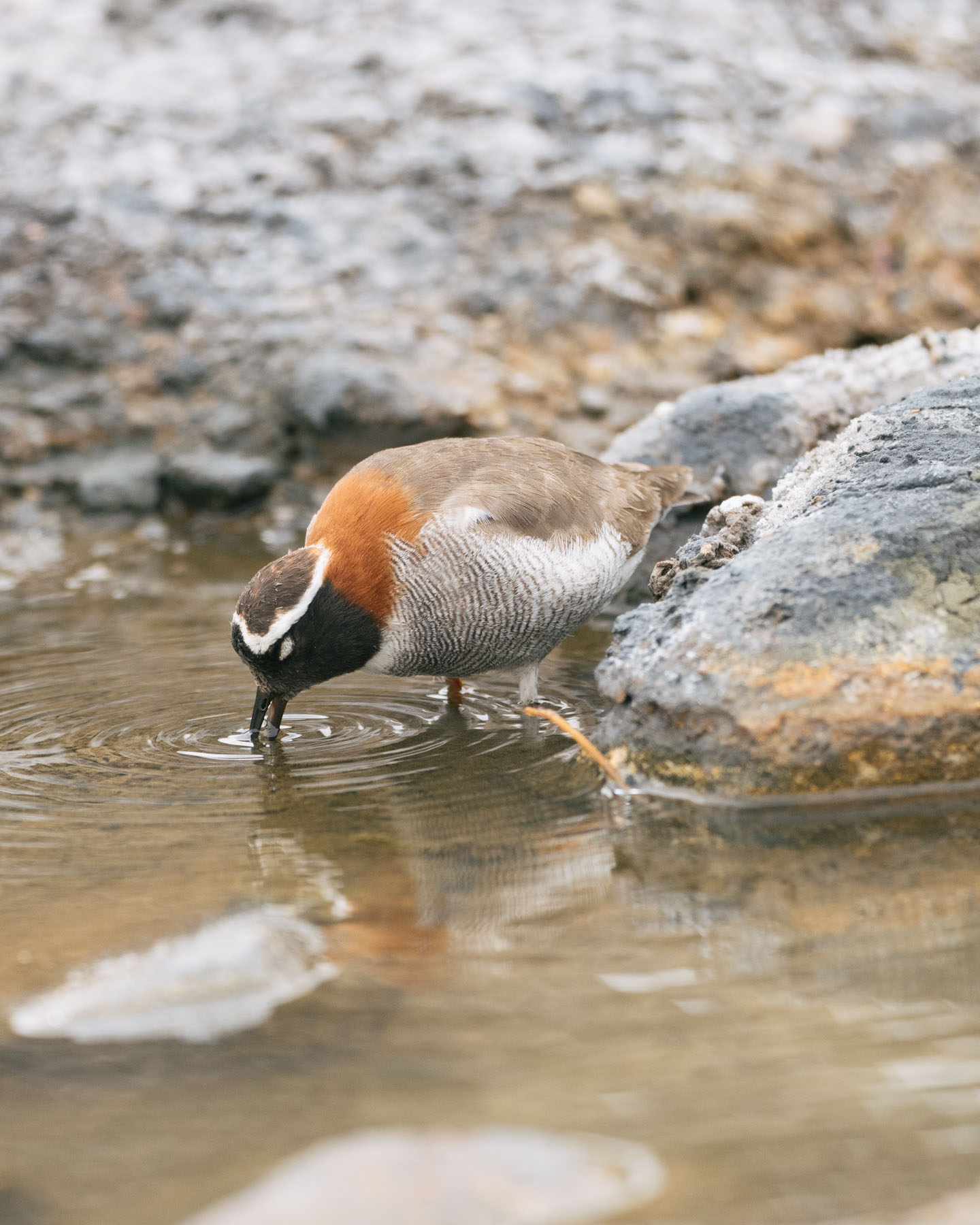
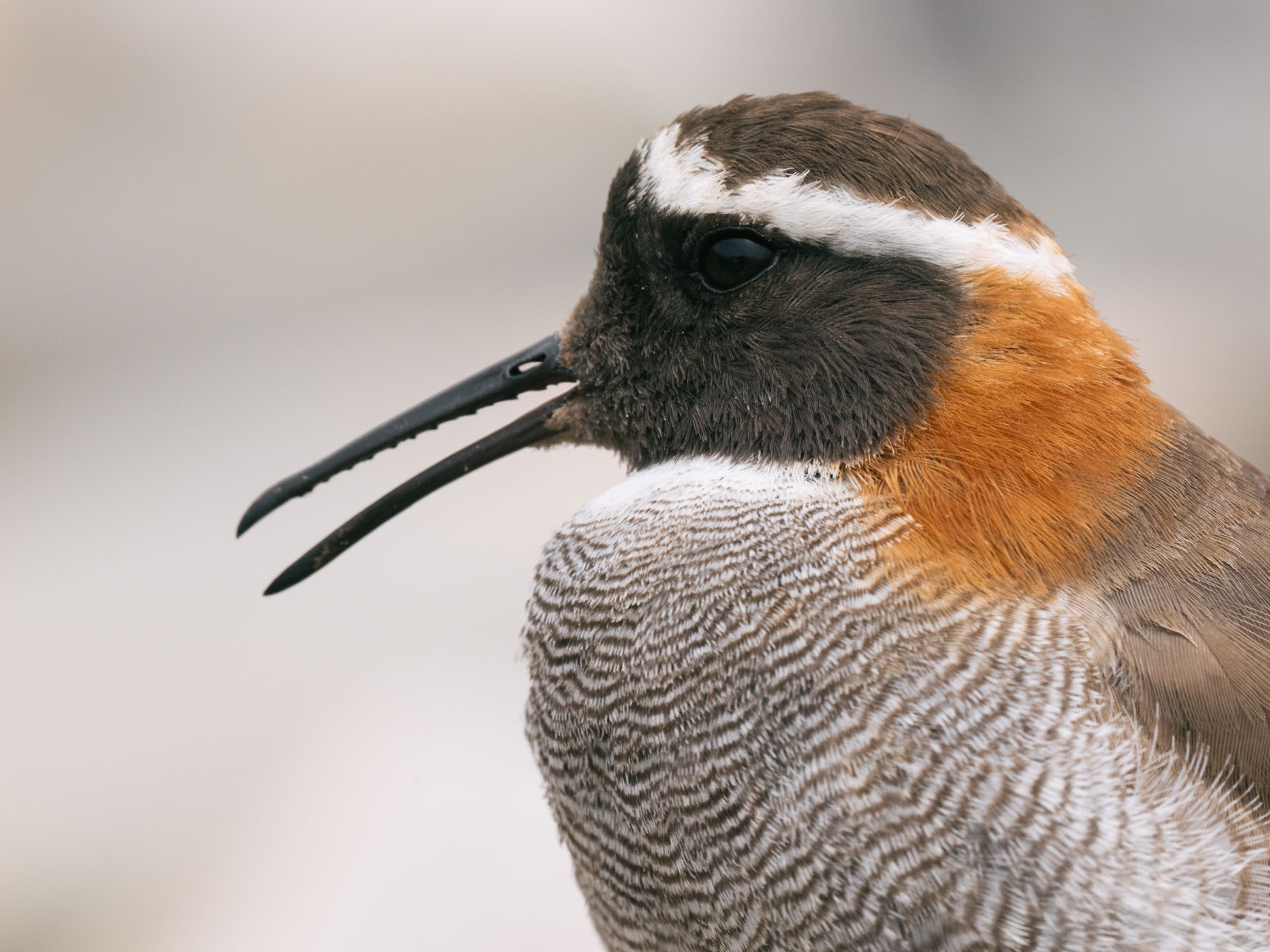
The chicks were incredibly cute, but the adult was in her own league of beauty. Her chalky black face and back were contrasted by the bright white crown that wrapped around her head – her namesake marking – framed by a rusty orange patch that curled from her nape to her finely barred belly. Her wings and tail were fairly short, and she stood upright in a confident stance, only flying short distances from her chicks with a fluttery lightness. She portrayed thoughtfulness in her more deliberate tendencies, wading halfway up her legs and splitting her time between food, preening, and watching over her chicks from shore.

Within arm’s reach
She paid us no mind, but the chicks were more curious and investigative of everything, including us. Still, the mother was content with their proximity to humans. Raymond and I had separated by twenty feet or so, and eventually, all three Sandpiper-Plovers ended up between us. In our lineup, they started near Raymond, and at one point, the mother was less than an arm’s reach from him. Then they all traveled on towards me, the mother staying in the center of us, and the chicks getting within inches of my body as they bounced around my face and finally past me to continue along the water.
With my chin on the ground and close enough to practically feel the pulses of their breathing, I felt so connected to their realities. This was something I hadn’t experienced with any other creature before. In this ethereal landscape, so far from human development, in a world so pristine and precious…with no cell service, other people, or interruptions…there were no words needed between Raymond and me to soak in and share those moments.


In the face of danger: Instinctual reactions
We took hundreds of photos, but had so much time with this family that there was plenty of space to simply watch them, too. I took in more details: the mother’s bill was slightly curved, with just the slightest of knobs at the tip, and when she opened it, a dozen slight serrations were visible. The chicks’ bills were short, stubby, and rounded.
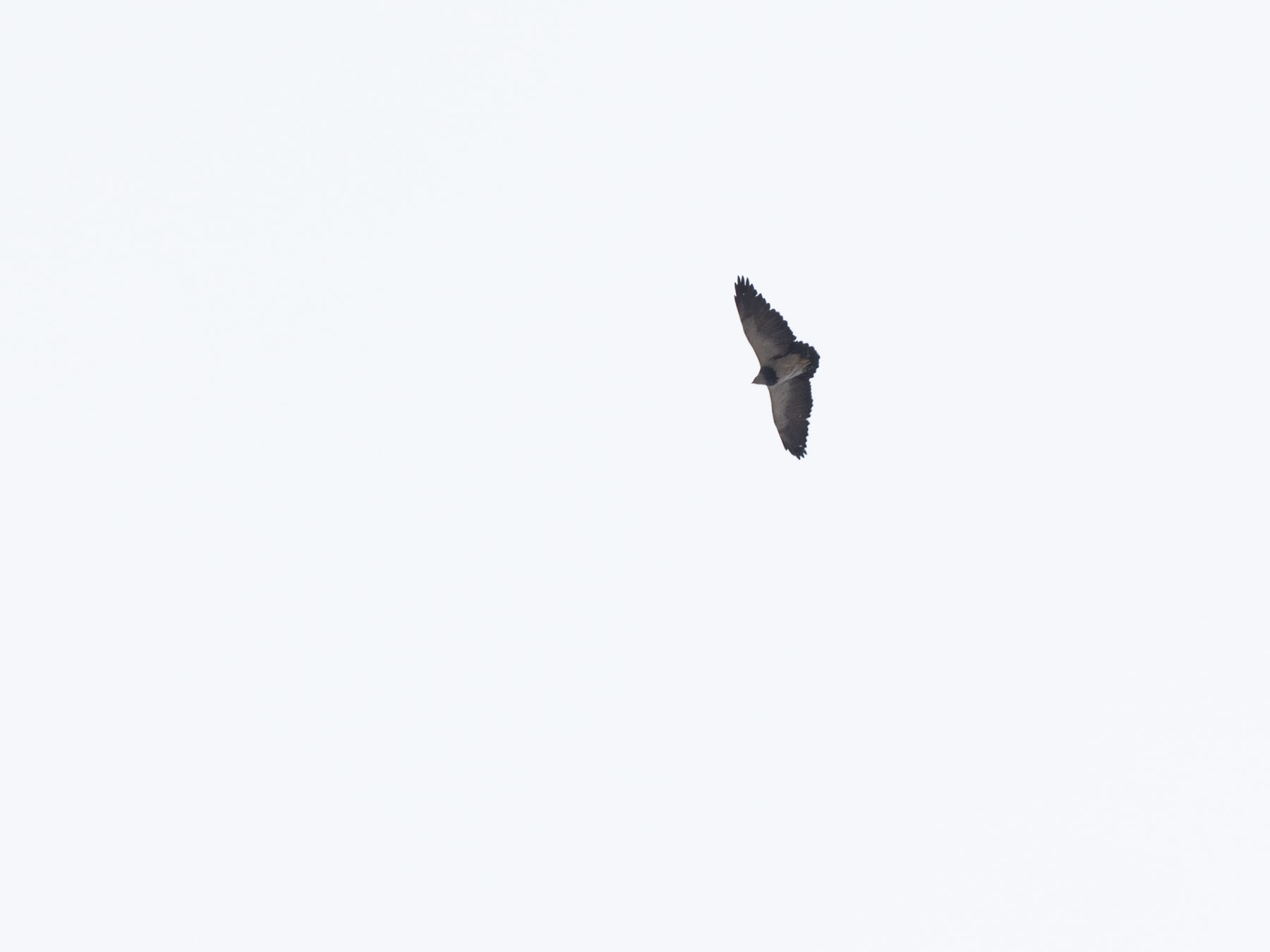
In contrast, all three’s legs and feet were the same size, which was noticeable in a moment that brought them together and showed a remarkable example of the mother’s protectiveness beyond us humans. It happened while Raymond was ahead of me, close to the trio, and I first saw him look up. I did, too, and to my surprise, there was a buzzard-eagle circling above. His photos later showed what tipped him off: the mother had seen it first and twisted her head sideways to clock it.
She tensed and called her chicks, and they obediently zipped toward her. Not far from Raymond, the first chick dove under her wing as she continued to gaze up. A beat later, the second chick made it to her, scrambling against its sibling for a moment before scuttling to the other side and taking a wing to itself. She hunkered down, and then they were motionless. I watched from upstream: six feet, four facing backwards, a statue of a mother, and Raymond frozen on his stomach and elbows beside them.


The buzzard-eagle continued on, and the Sandpiper-Plovers visibly relaxed. The mother closed her eyes and rested. Raymond’s head dipped, too. Their naps were short, and when the birds spread out again, they all three stretched, seemingly refreshed.
A prolonged encounter
It was a scene too hard to leave…and so, we didn’t. We spent another hour among these birds, our own hunger forgotten, not worried about the time, and taking in this magic. The family continued its day with no more looming predators; the mother relaxed while the chicks explored. When she brooded them again for a second nap, we finally decided it was time. Walking away from those birds, I hoped their world would forever stay that wholesome.
Before getting in the car, we sat together on the rocks for a moment, collecting ourselves as we exited their realm. Our conversation picked back up after the long stretch of near silence. Washes of euphoria and disbelief continued to wash over me, and words were hard to find.

A farewell surprise
It was an encounter so powerful that it felt okay to leave it, with nothing else that could have made it more perfect. And yet, those feelings from earlier were still seeping into my consciousness. It was harder than I could have prepared to experience something so pure amidst the struggles of the world. Slowing down – practically freezing time – the fragility of those moments was so pronounced. I thought about how the experience was fleeting to me, but not to those birds, and searched for solace in that.
We decided we had to at least get to the hot springs around the bend before turning back. We scooted the car up and opened the doors…and, right there, was yet another Diademed Sandpiper-Plover. Just like that, the shock broke the tension inside me, replaced by giddiness. We surmised that this might be the father, and he was even more bold and unafraid, practically running over our shoes as we all three circled the warm pool. We spent several more minutes with him, enthralled by his apparent charisma, using our phones for photos this time. He was a cherry on top, and a timely reminder that nature’s surprises never cease.
© Raymond L. VanBuskirk
What remains with you
We rolled down from that mountain with new marks on our lives. A field guide shows you the birds of the world, and birders tell you about amazing species to see. Both can make you dream, but neither can capture the intimacy of an experience like what we’d just had.
That’s why Diademed Sandpiper-Plovers are so transcendent: their place in this world is unique. They inhabit a realm scarcely touched by humankind, and to see them, you must be in a place of fragility. When you get there, you can’t help but take in the whole environment. It’s not just the birds themselves: it’s the snowy mountains in the midst, the way a trickle of water cuts the silence of the vastness, and catching yourself holding your breath as a breeze brushes your face. The teetering balance struck, but was susceptible to tipping at any moment.
In feeling all that, I sensed my own vulnerabilities, too. Being face-to-face with a creature so pure, glimpsing its entire world for just a little while, I so fiercely willed it all to never change.
Now, from wherever I am, I can imagine that place and have faith that it remains. That those birds remain, unaware of any other reality, yet in tune to constant changes in their realm in ways I can’t fathom. That is my solace: that they are constantly adapting as they always have. That we all are, in ourselves and in the world. Even in ways we aren’t aware of.
Being in the presence of something so perfectly natural and wonderful is nothing short of precious. For humans, it’s not an escape from reality, but into it. May we all have the chance to feel something so true.