VENT's 50th Anniversary Celebration
Trip Report
This is my recap of VENT’s 50th Anniversary Celebration in April 2026 in Texas. You can check out the eBird Trip Report here for the full species list.
Jump to a location
It was an absolute joy to join the Victor Emanuel Nature Tours crew in mid-April for a one-of-a-kind event: VENT’s 50th Anniversary Celebration. Over the course of four days, more than one hundred clients, a few dozen tour leaders and staff, and four stellar keynote speakers gathered for a full blitz of the Texas Coast and surrounding areas as spring migration rolled through the Central Flyway.
Celebrating 50 years of Victor Emanuel Nature Tours
Building on the precedent set by previous milestone celebrations, this event was designed to honor VENT as a company as well as its staff, leaders, and client base in one big huzzah. There were aspects of typical small group tours as well as large gatherings at festivals, and participants ranged from first-timers with the company to veterans of 50+ tours completed with VENT. Likewise, the employees spanned from guides with more than forty years at the company, clear to fresh hires and associate leaders like me. Bringing everyone together under one roof was a special way to connect with such a broad range of experiences within the company, and it seemed that each dinner table and field trip van was full of a welcoming mix of veterans and newbies.
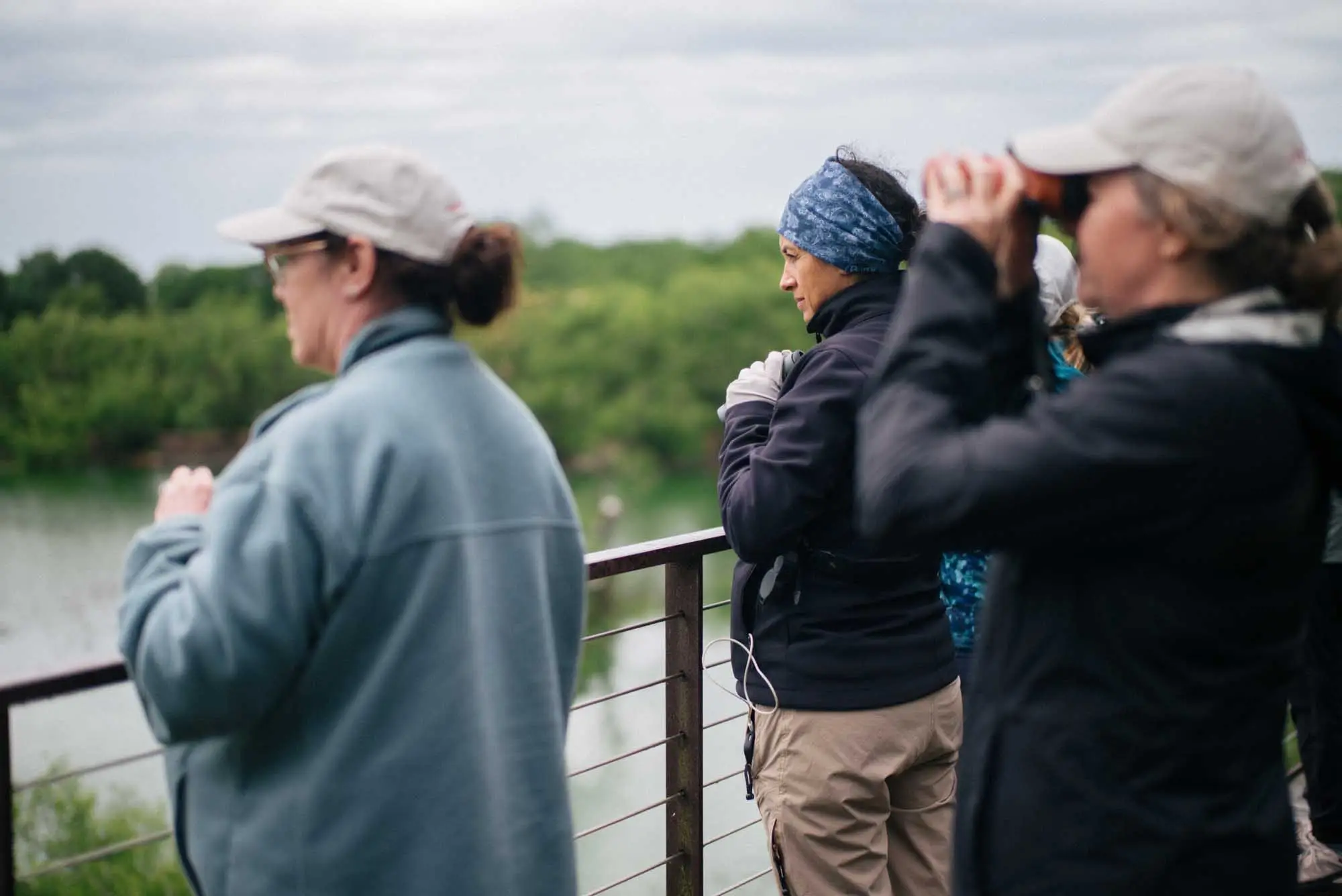
Days were filled with birding the renowned woodland migration traps of High Island and nearby areas; shorebirds and waders galore in a mix of coastal marshes and shorelines, working agricultural fields, and freshwater concentrations; plus a sampling of upland forests and pineywoods. Everyone was divided into small groups to visit one of four zones each day, covering diverse locations with different guides. We gathered as a group each evening for a social hour, dinner, and keynote presentation.

Fallout in Sabine Woods Sanctuary
The daily pulse was on migration, and the shifting winds right before our first day of birding caused a major spectacle. My group, co-led by myself, Max Breckenridge, and Raymond VanBuskirk, first concentrated on Sabine Woods Sanctuary. At that point, this 27-acre woodland (owned by the Texas Ornithological Society) was utterly brimming with thousands of birds. We found 19 species of warblers within a quarter mile of the entrance, including Swainson’s, Cerulean, Golden-winged, and nearly nonstop Prothonotaries, Black-and-whites, and Hoodeds.
Beyond the diversity of the species was the spectacle of birds in the fruiting mulberries throughout the woods. It was the first time I’ve ever truly witnessed birds “dripping” from the trees. Swarms of Cedar Waxwings, Summer Tanagers, Indigo Buntings, and Orchard Orioles, and Wood Thrush were in constant motion. We couldn’t help but get by on snacks to relish in the nonstop excitement past a typical lunch hour. It was the kind of morning that I simply will never forget.

Sea Rim State Park, hope in conservation
We finally broke away for lunch and picnicked at Sea Rim State Park. There, we had four plover species, five tern species, and a comparison of Great- and Boat-tailed Grackles that were interested in our leftovers. Our evening wrapped up with Scott Weidensaul presenting about his newest book, Return of the Oystercatcher, a compilation of stories of hope in bird conservation.
Rainy Day Birding at Fort Travis Park
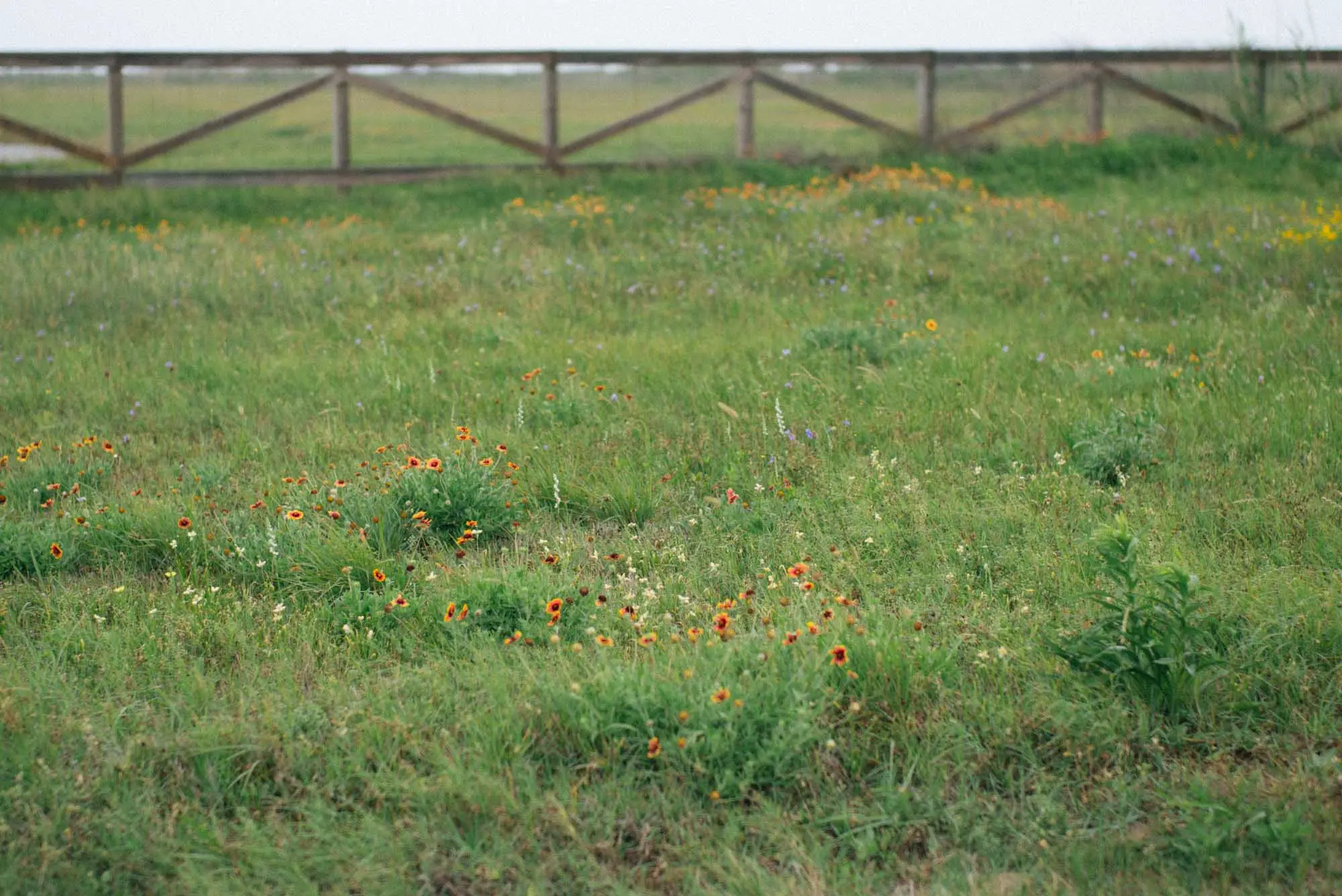
That night, storms rolled in. It was the start of 36 hours of interspersed rain and heavy winds. Our crew seemed to draw a lucky card for a morning scheduled around Bolivar Flats: a fantastic place to observe shorebirds, mostly from our vans. But first, we looped around Fort Travis Park, which has low grassy fields along a break wall (as well as remnants of WWII-era military structures). A frigatebird drifted high over land, Long-billed Curlews were close to the roads, and at one point, out popped a Clapper Rail with five fuzzy black chicks.
Bolivar Flats
We were a cheerful and optimistic bunch willing to make the most of the weather, and on we went to Bolivar. We passed White-tailed Kites and Scissor-tailed Flycatchers on the way in, plus had brief looks at American Bittern and Upland Sandpiper.
Once out on the shoreline, we skimmed through dozens of American Avocets – both on land and rafting in the wave breaks – and found several Piping and Snowy Plovers, Black Skimmers, and Black Terns among more numerous birds. When we’d scouted this area on a sunny day before the event, the coast leading up to Houston Audubon’s protected stretch was filled with parked cars, beach tents, and people enjoying the water. Today, it belonged solely to the birds, and most were feeding actively where they’d previously been crowded out. The fragility of Bolivar Flats is also what makes it a haven; the coast is constantly being reworked by storms and tides, keeping sediments exposed and plentiful with the invertebrates that shorebirds rely on.
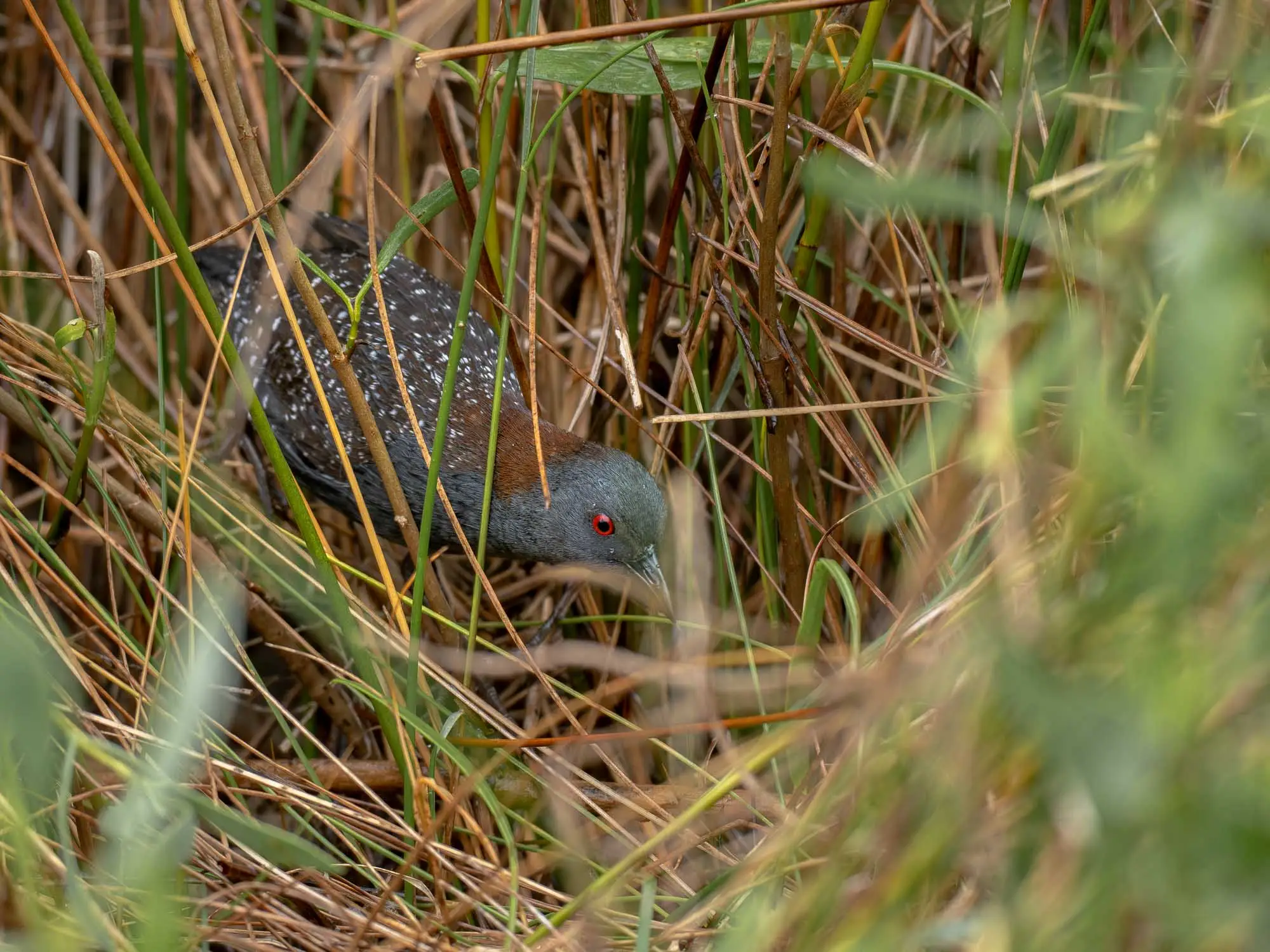
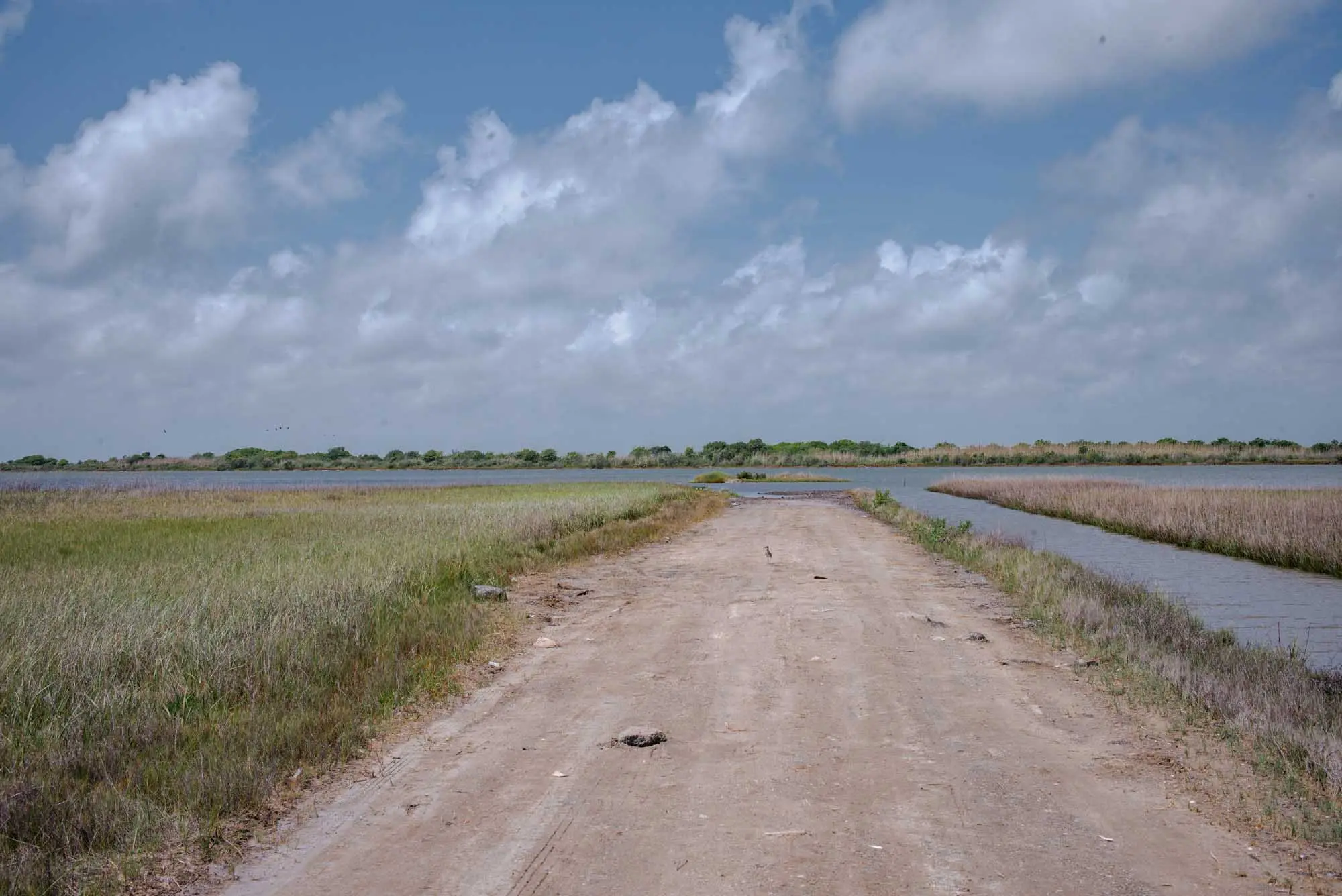
Again, we were happy with our day and having a grand time together. But as we crept back out the entrace road, we heard two resounding ki-ki-keers! of a Black Rail. I was thrilled to so clearly hear this life bird so close to the roadside. We lined the vans up in the rain and opened the sliding doors to gather everyone near the spot. Raymond took two handfuls of reeds and gently split them to make a U-shaped gap less than a foot wide, and tucked his speaker at the base. We all took positions in a line against and inside the vans, trying to keep our binoculars dry and close to our eyes as we trained them on the spot. One blitz from the speaker, and…presto!

Just like that, in mere seconds, one of the hardest-to-see birds on the continent poked through the gap as it searched for the sound, responding quietly. And then again!..doubling back, slow and curious. I can’t remember at what point we collectively let out our breaths and looked at each other in disbelief, but the entire thing happened once more before we took off. I have the photos to prove it happened, and yet still can hardly believe it!
Smith Oaks Sanctuary and Rookery
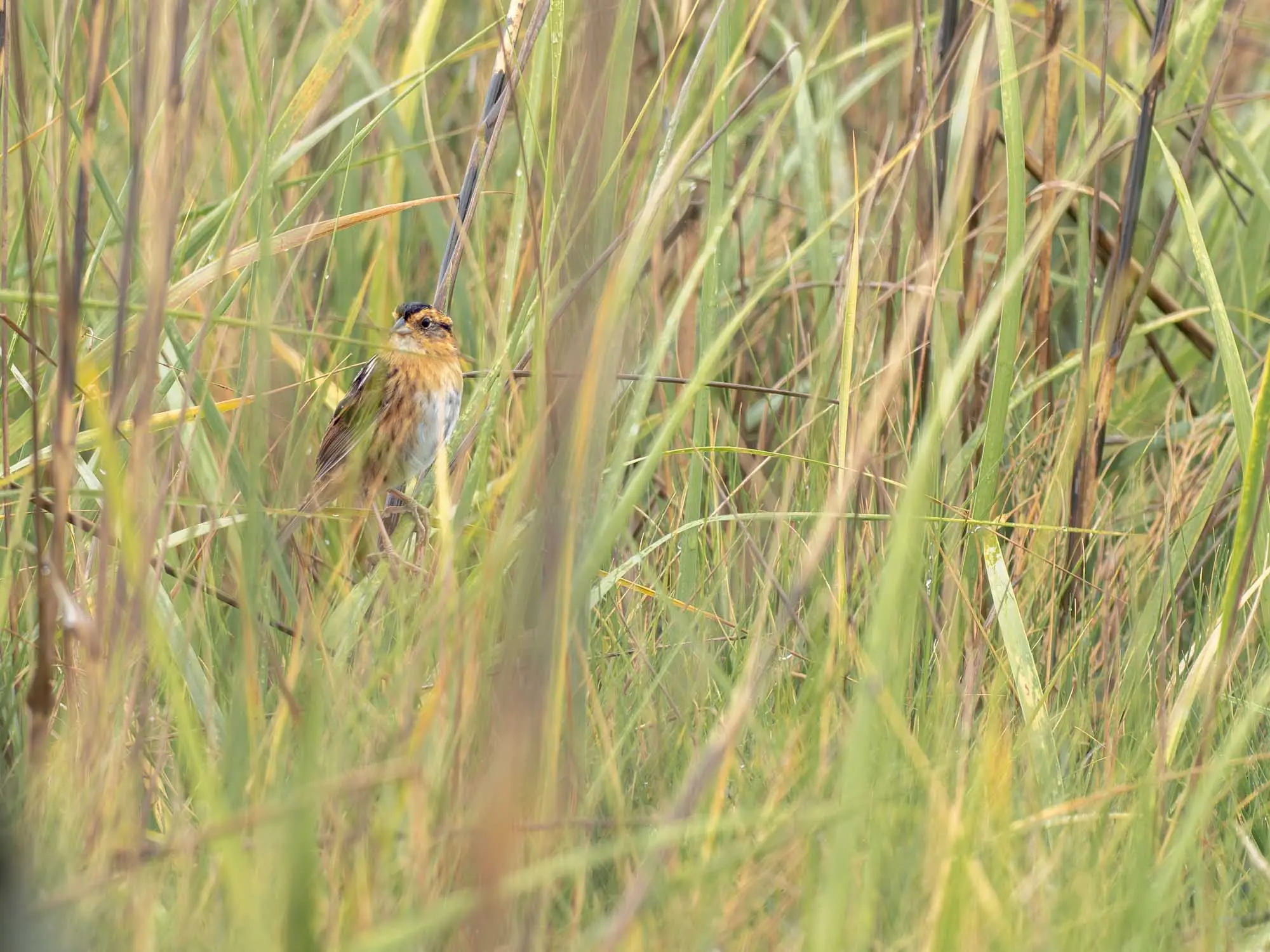
The rainy pavilion lunch was no bother after the morning’s fortune brought on by a recipe of weather, timing, luck, and skill. The worst of the rain coincided with easy van views of obliging Seaside and Nelson’s Sparrows who seemed more concerned with establishing territories than the storm.
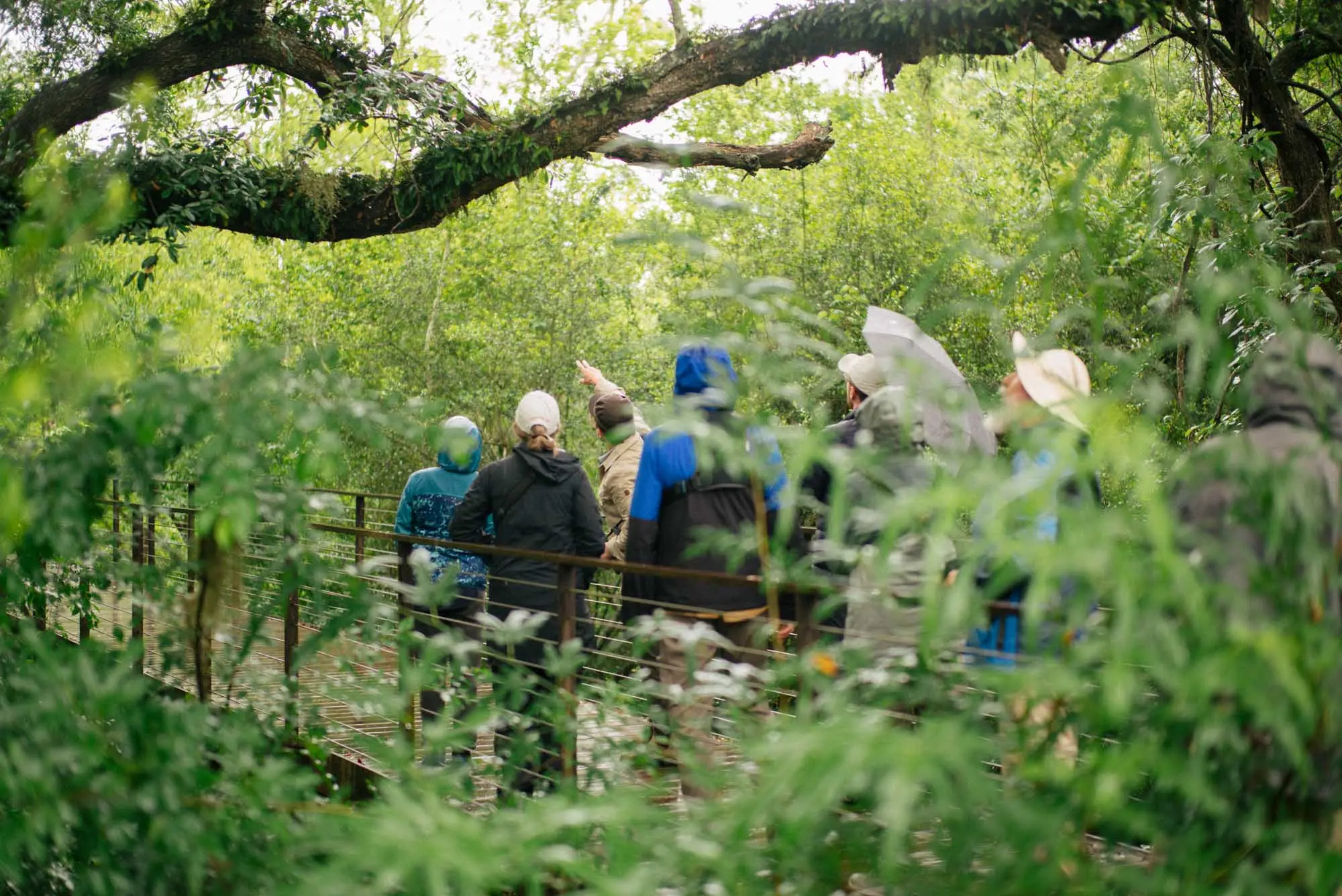
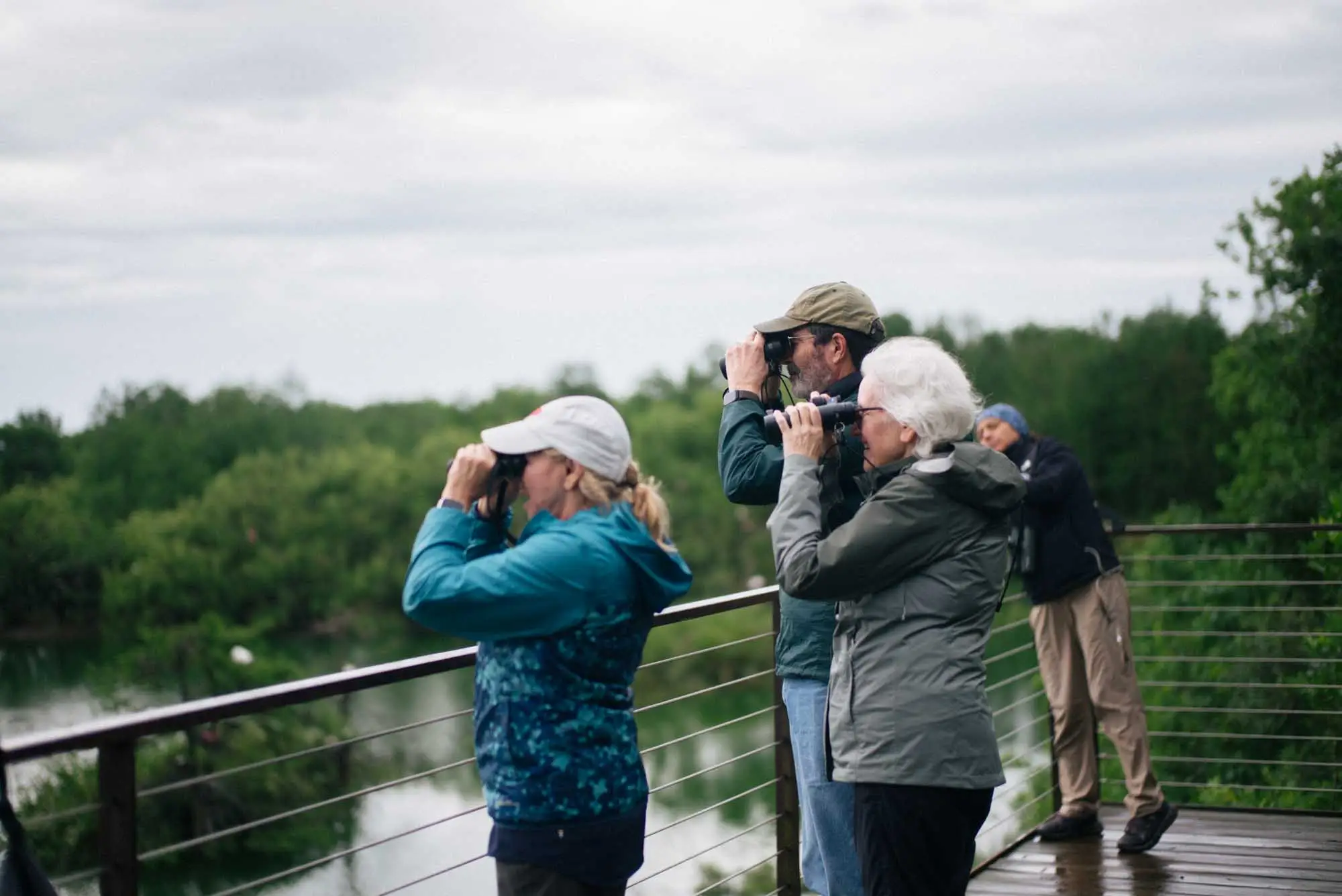
After arriving at Smith Oaks Sanctuary, our entire group was so energized that we didn’t mind a misty stroll on the pristine canopy boardwalk toward the brimming rookery. We were held up by Blackburnian, Prothonotary, and Golden-winged Warblers on our way, but finally made it to the overlook that was planned as our last stop while our time wound down. We took in the calls of the activity of hundreds of nesting birds, including Roseate Spoonbills, Neotropic Cormorants, Tricolored Herons, and Snowy, Tricolored, and Great Egrets. Purple Gallinules and American Alligators worked along the shoreline under the platform. It was a rushed visit, but for all the right reasons after such a remarkable day.
A Rare Bird Chase
Finally, in the parking lot, we received our last surprise: word that a Ruff had just been spotted right along our route back to the hotel. The race was on! We popped out of the vans one last time to scope this iconic US vagrant and incredibly unique, nonbinary shorebird species. This day wound up being totally different than the previous one, yet equally memorable.
Back at the hotel and in dry clothes, we enjoyed another dinner with the entire Celebration crowd. We closed the night with a presentation about bird intelligence by Jennifer Ackerman, based on her bestseller The Genius of Birds.
Away from the coast: Big Thicket National Preserve
The next morning dawned cloudy, but dry. Today, we were in for a change of pace: a trip north into the westernmost extent of piney woods, with a dash of hardwood forests and desert scrub mixed in. We were in search of breeding birds throughout the patchwork of Big Thicket National Preserve.
We got the jump on our target species, knowing that the weather could take a harsh turn at any point. Right away, we found singing Swainson’s Warblers, Yellow-breasted Chat, and Prairie Warbler. With satisfying views of all three species, the pace relaxed as we took a few short walks within the lush forest habitat.
We encountered one nice mixed flock of migrants, including Bay-breasted Warbler, and intersected Kentucky and Yellow-throated Warblers. At one point, a Mississippi Kite circled overhead just long enough for our entire group to get binoculars on it. As thunder started to roll in from the distance, a single Brown-headed Nuthatch squeaked overhead, eventually coming in right over us. Just as the rain started, we started the return to Beaumont.

Cattail Marsh at Tyrrell Park
The city of Beaumont has invested in birding and conservation tourism for well over a decade, and Cattail Marsh is its crown jewel right on the outskirts of town. We took our happy and weary travelers back to our hotel in two groups, and the latter enjoyed some extra goodies on the short, productive boardwalk, including Fulvous Whistling-Ducks, Wilson’s Snipe, and multiple Least Bitterns.
Back again to our home base, we listened to the night’s keynote by Ed Yong about his journey to birding and how we can inspire connections to nature. Once again, the day was filled with birding and camaraderie that was one-of-a-kind.

Jocelyn Nungaray (Anahuac) National Wildlife Refuge
Our last day was one of my most anticipated field trips. National Wildlife Refuges are some of my favorite places to explore across the continent, and Anahuac is a top-tier one at that. The majority of the NWR is comprised of managed freshwater marshes that harbor a plethora of birds and alligators. It’s the kind of place you could comb for days, but for our single morning there, we focused on the highly productive driving loop called Shoveler’s Pond.
Our first stop for bathrooms at the visitor’s center coincided with viewing a family of Barn Owls that boldly nested openly in a large gazebo awning. We oohed at the close-to-fledging chicks while Cliff Swallows collected mud for their nests behind us.

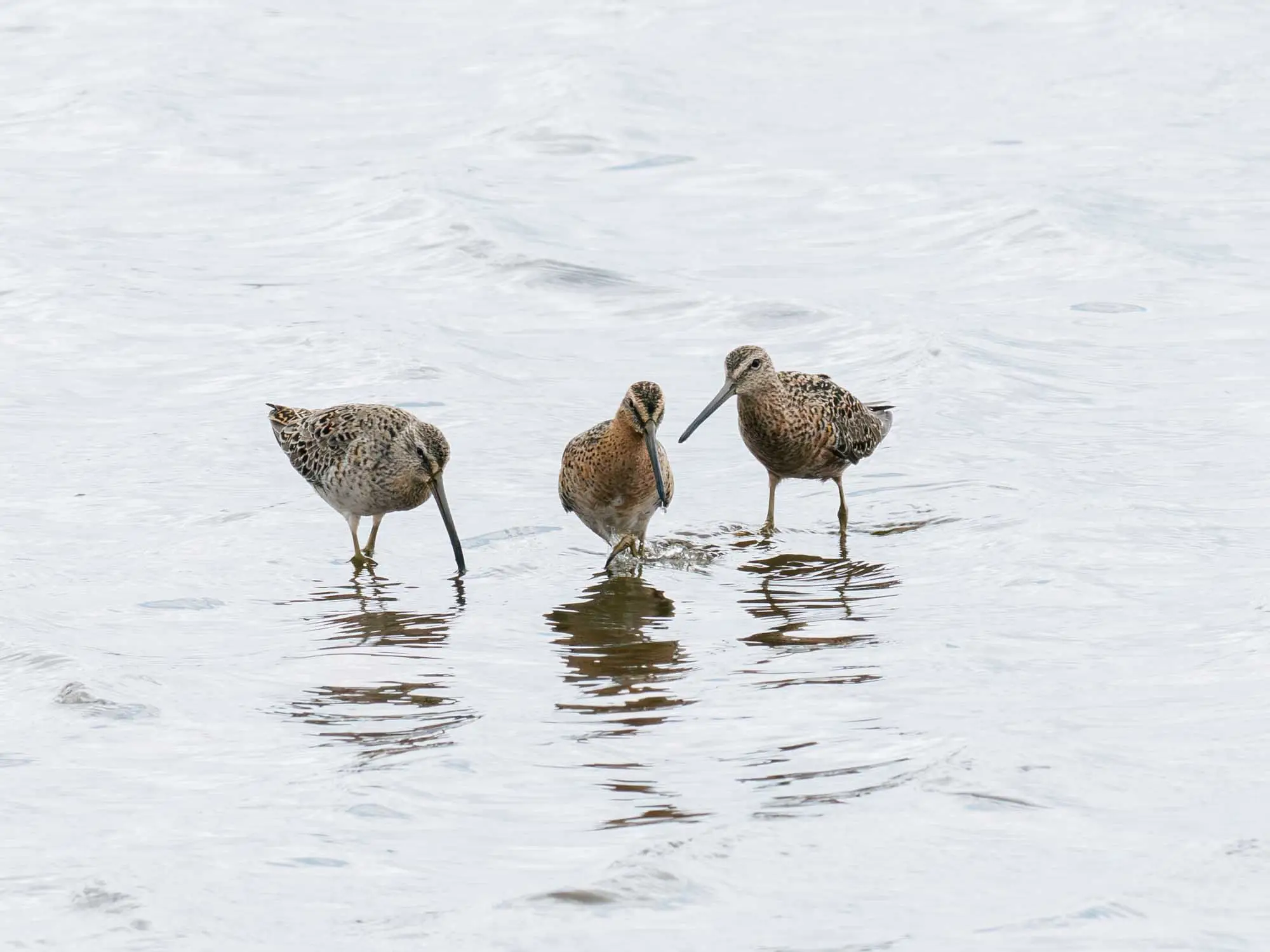
With that, we were off, digging right into several stops to scope the shallow water and mudflats. We lucked out on Sora and King Rails multiple times, eventually having both right in front of us. A few Mottled Ducks and many White Pelicans flew by in the distance. Once we took stock of the main species within view, we sorted through the plentiful shorebirds in earnest.
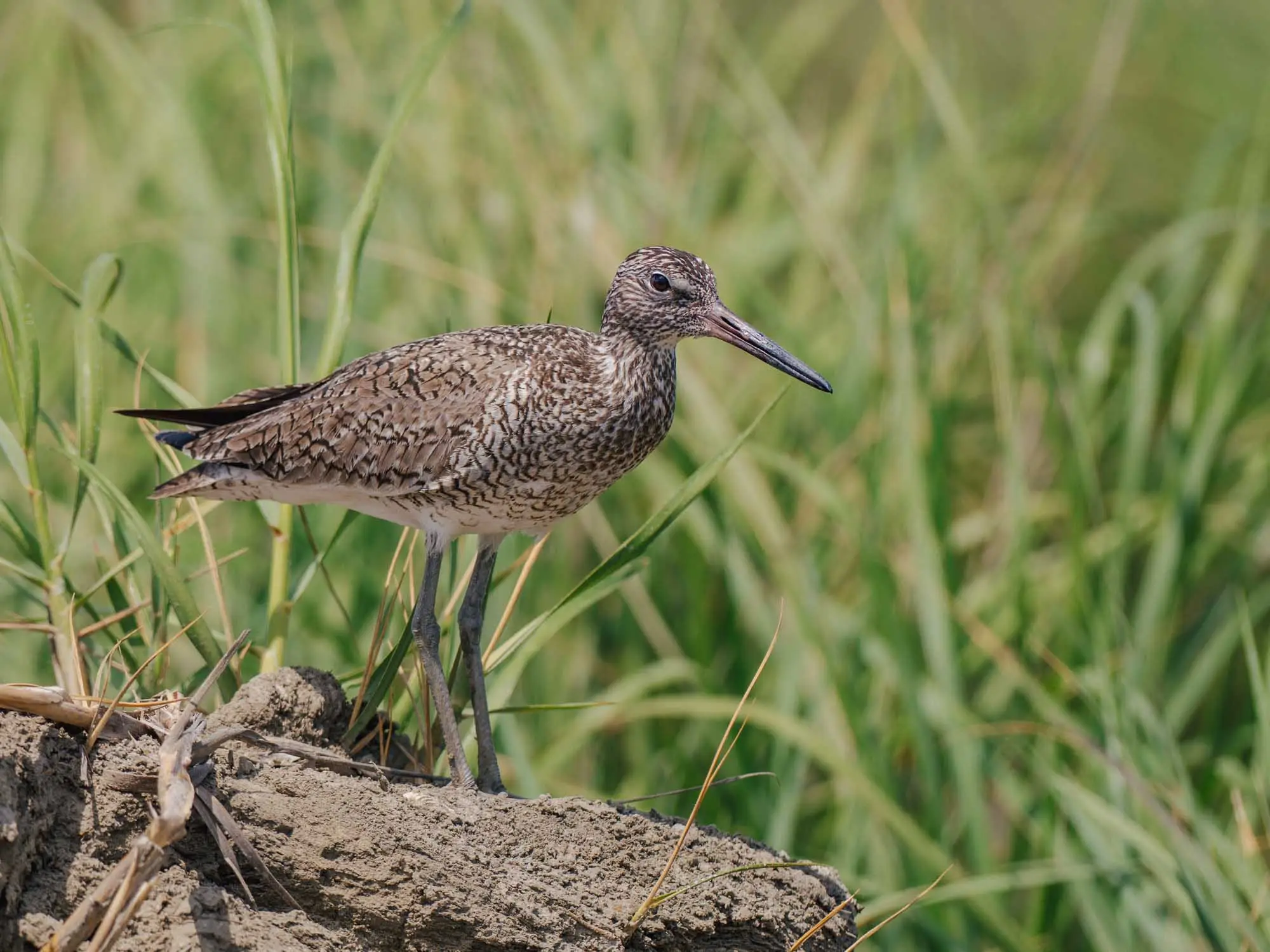
From the scattered flocks of both dowitchers and yellowlegs, we picked out Dunlin and Stilt Sandpipers, whimbrels and willets, and eventually a single Wilson’s Phalarope. On a short boardwalk, we set off on foot to take advantage of great lighting and extremely close peeps to further workshop ID skills. Marsh Wrens, Swamp, and Savannah Sparrows skittered on the exposed mud. We closed our time in the NWR with a stop for a roosting Common Nighthawk that we were lucky to get a tip about.
Boy Scout Woods and a tribute to legacy
We closed our last day at one of the most iconic hotspots in the country: Boy Scout Woods on High Island. This is another patch that’s managed by Houston Audubon, and when fallout conditions are right, the concentration of migrant birds can be hard to top. The winds had shifted to push birds more inland on this afternoon, but even so, there were a handful of goodies to be found. Some time spent in the bleachers facing a pond and drips allowed for quiet reflections on the perils and wonders of migration.
Our final keynote was a special one delivered by Kenn Kaufman about Victor Emmanuel’s legacy in his company and the birding world. The week was fulfilling and jam-packed, and most goodbyes were made sweeter by knowing that folks would be reunited again on a future tour elsewhere in the world.

Gathering groups of birders
There’s something to be said about a gathering this many like-minded birders with such a wide range of shared experiences. Friendliness and passion flowed through the crowd, and the VENT Celebration managed to capture the excitement of the masses while still creating daily small-group experiences like a typical birding tour. Paring those aspects with full logistics management plus a one-of-a-kind keynote lineup created a totally unique experience. Participants were able to gather with old friends, meet new ones, and explore with a huge swath of VENT staff throughout the week.
Events like this are rare, and for good reasons: not only are they a challenge to pull off, but they simply wouldn’t be as special if they were more common. Folks were already asking about what the next milestone celebration would be, and hoping they’d again snag a spot for it. Another five years, perhaps?